Channels with no shared history
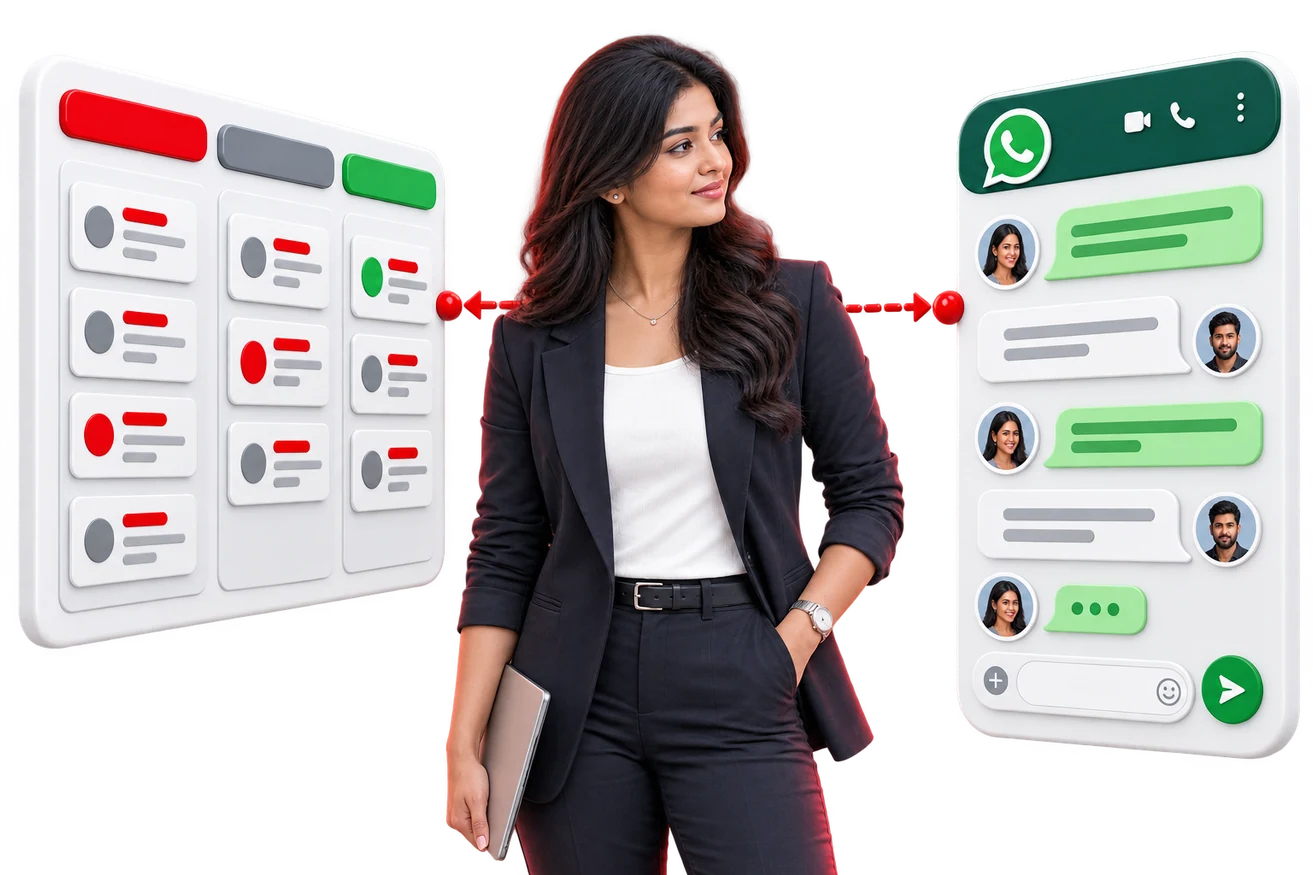
A customer messages on WhatsApp, then calls. The second agent has no idea what the first conversation was about.

Communication & Telecom
Customer communication breaks when each channel is a separate island — a WhatsApp number on someone's phone, an SMS panel a marketing agency logs into, a phone line with no record of who called. Nothing is connected to the customer record, so nobody has the full picture.
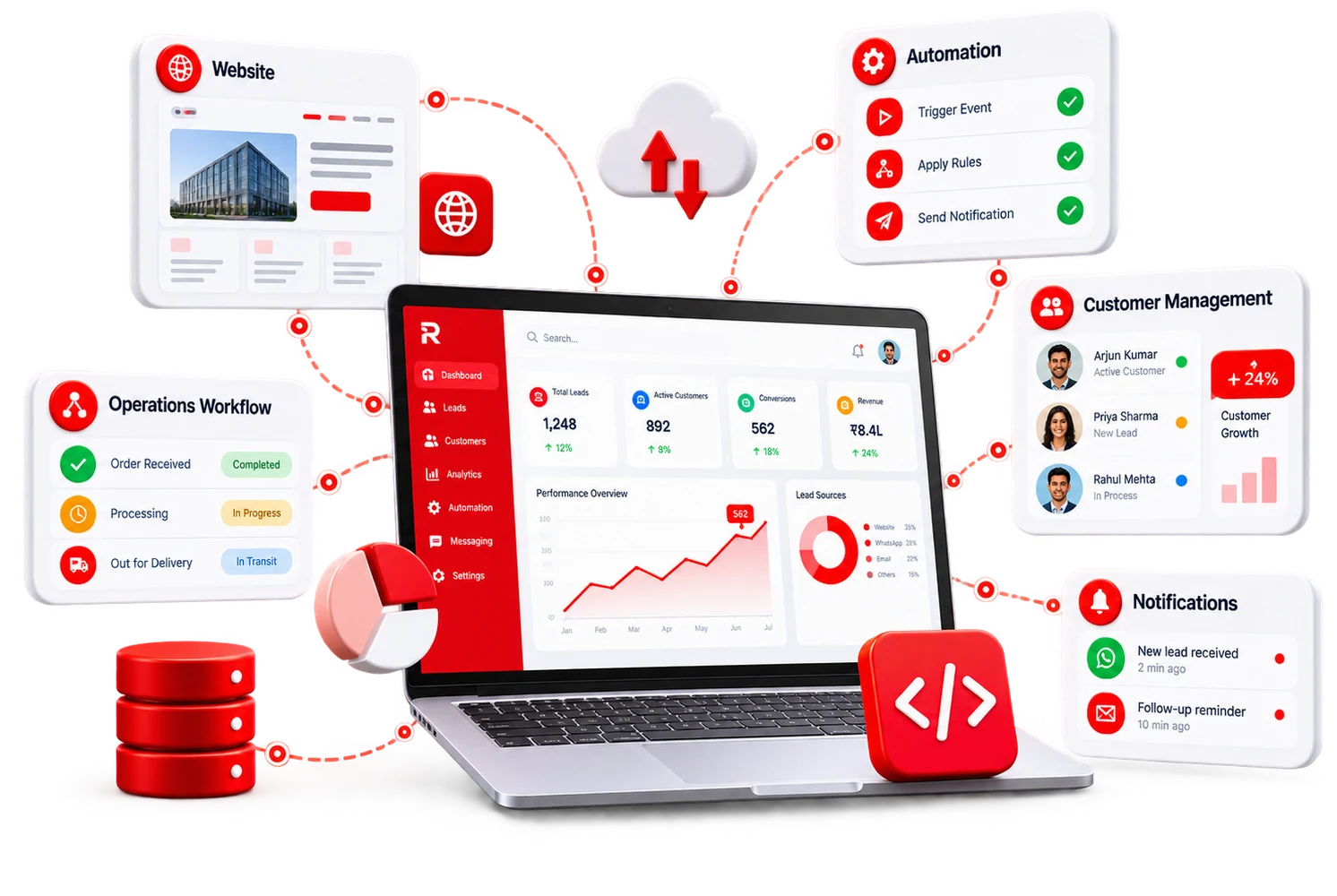
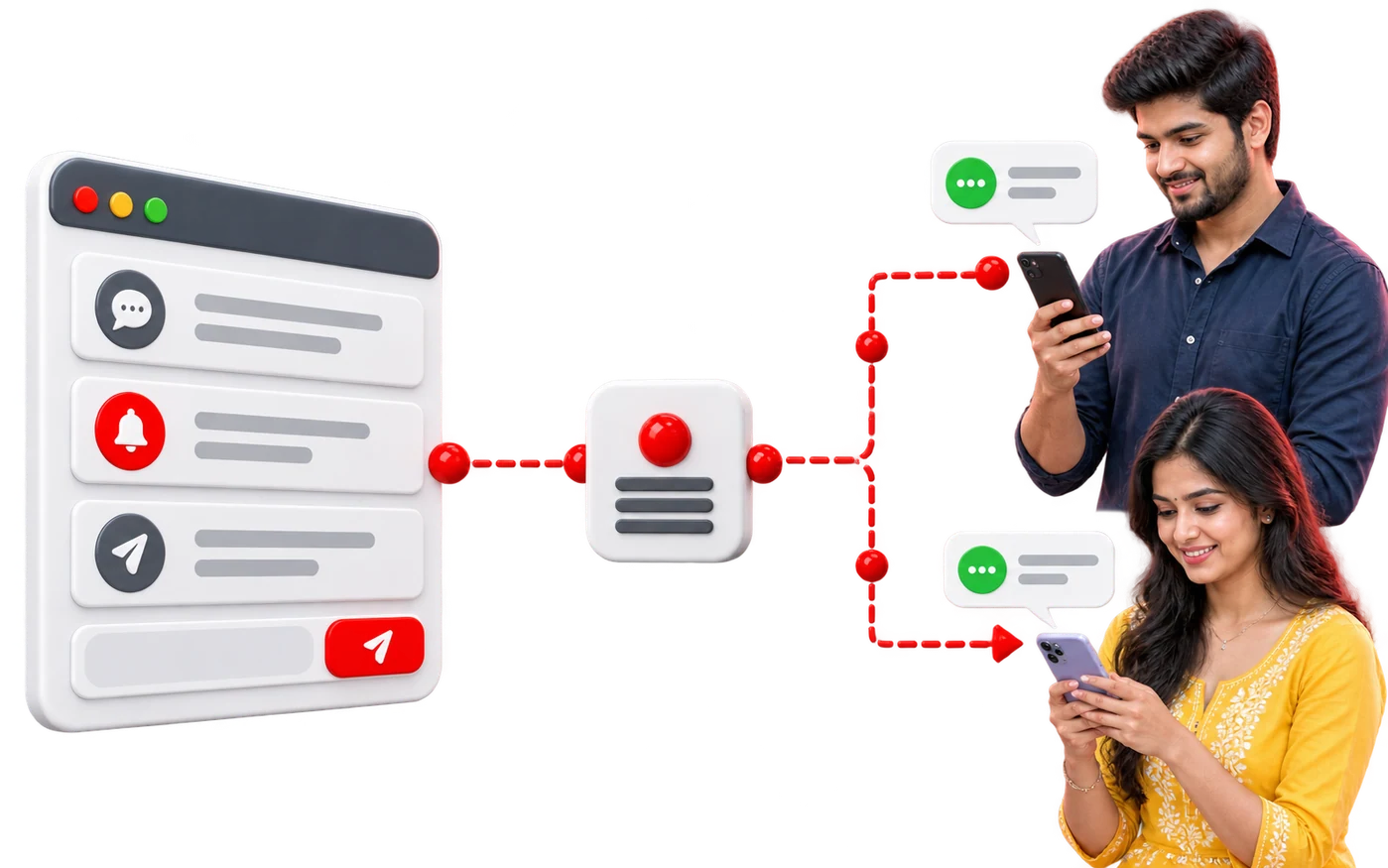
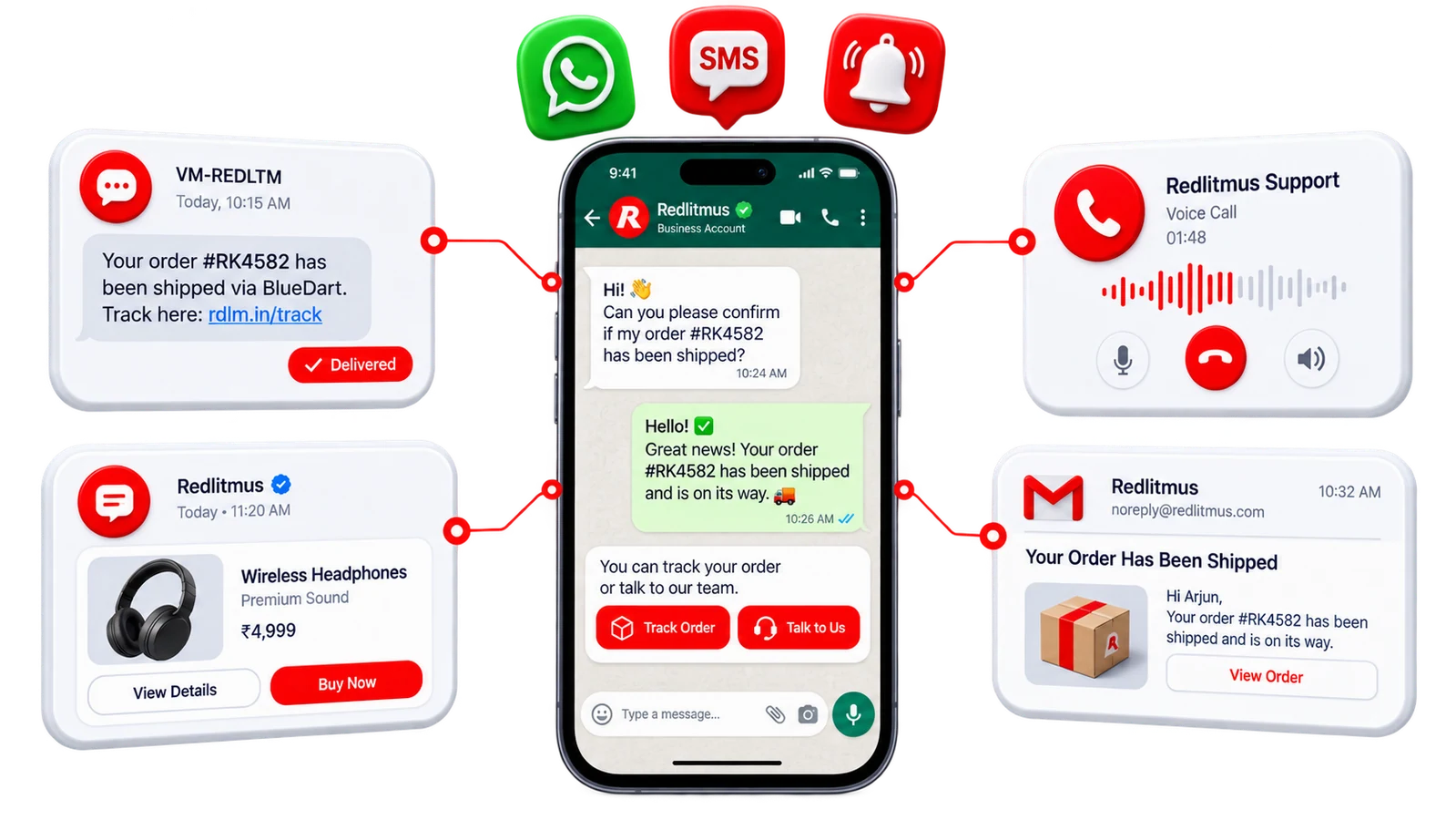
We build communication as infrastructure. The channel your customer prefers — WhatsApp, SMS, RCS, voice — connected through APIs to your CRM, your store and your applications, so every message is triggered by real events and logged against the right customer.
In short
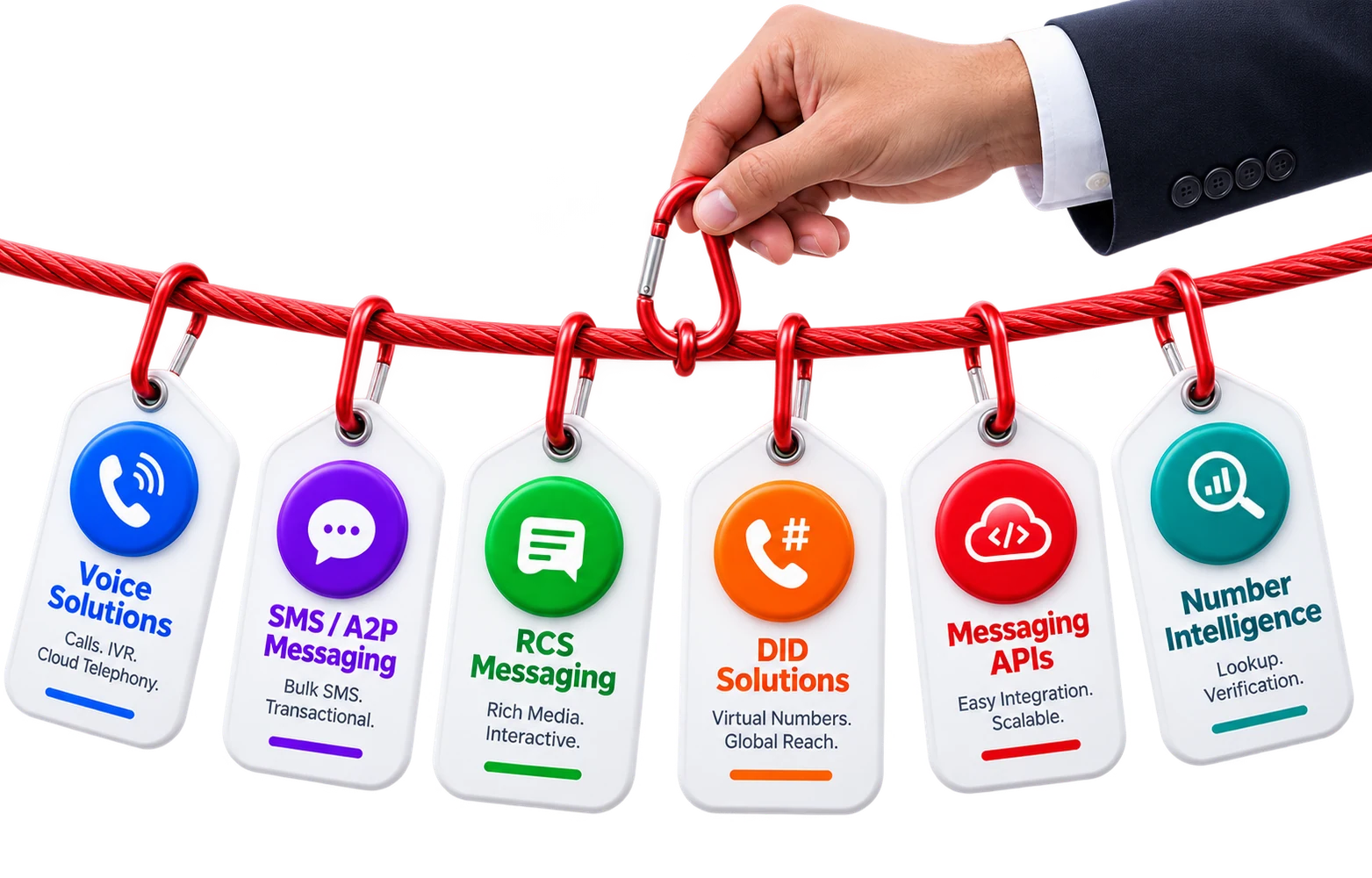
Redlitmus provides WhatsApp Business API solutions, messaging APIs, SMS and A2P messaging, RCS messaging, voice solutions, DID numbers and number intelligence — implemented as infrastructure connected to the client's CRM, store or application, with delivery tracking, channel fallback and conversation history on the customer record.
A customer messages on WhatsApp, then calls. The second agent has no idea what the first conversation was about.
Someone exports a list and pastes messages by hand, so communication happens in batches instead of at the moment it matters.
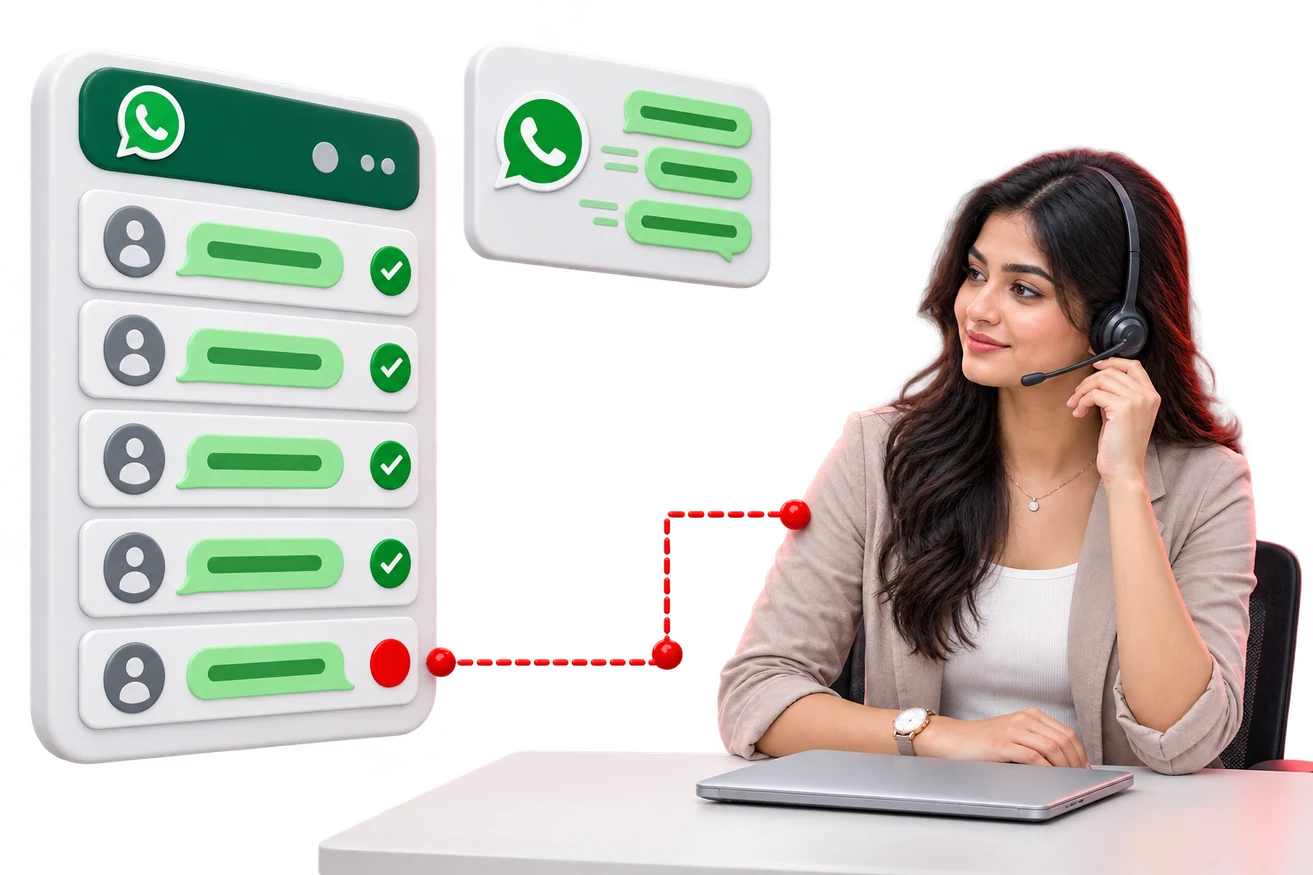
No delivery reports, no failure handling, no idea whether the OTP or the dispatch alert actually arrived.
No verification, no templates, no team access, and the customer history leaves when the employee does.
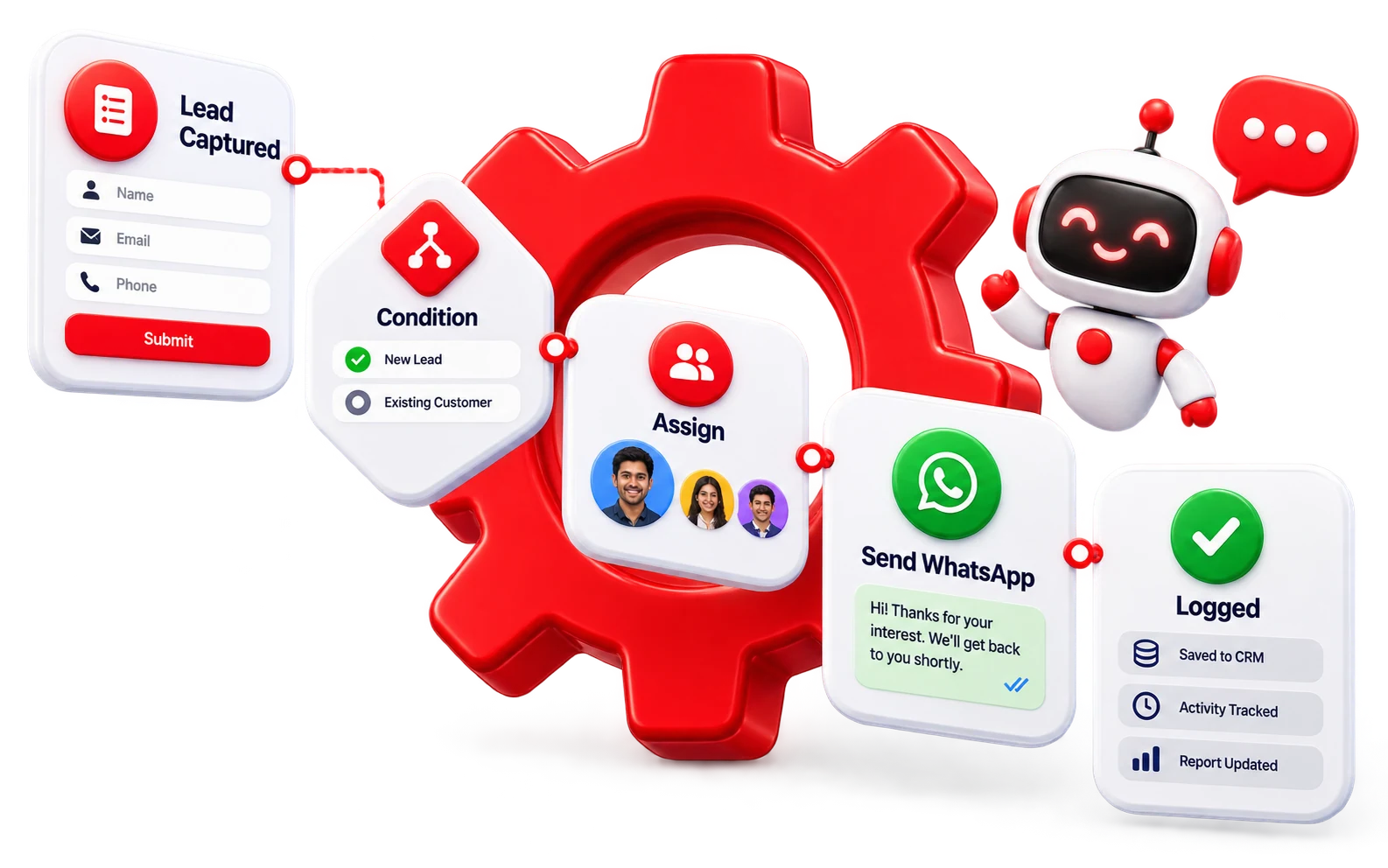
We implement the channels, connect them to your systems through APIs and webhooks, and build the layer that decides what is sent, when, to whom and through which channel — with delivery tracking, fallback and full conversation history against the customer record.
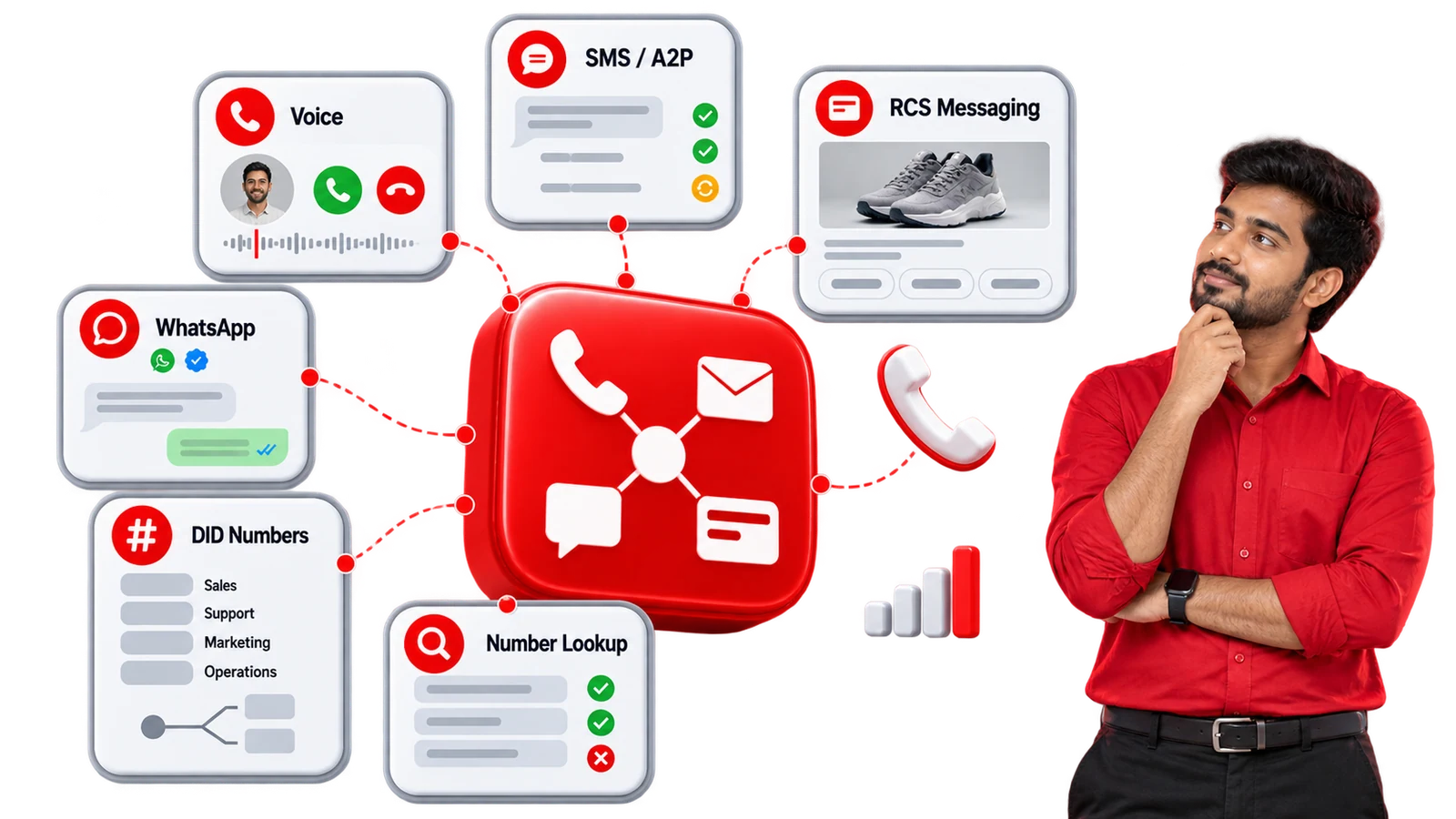
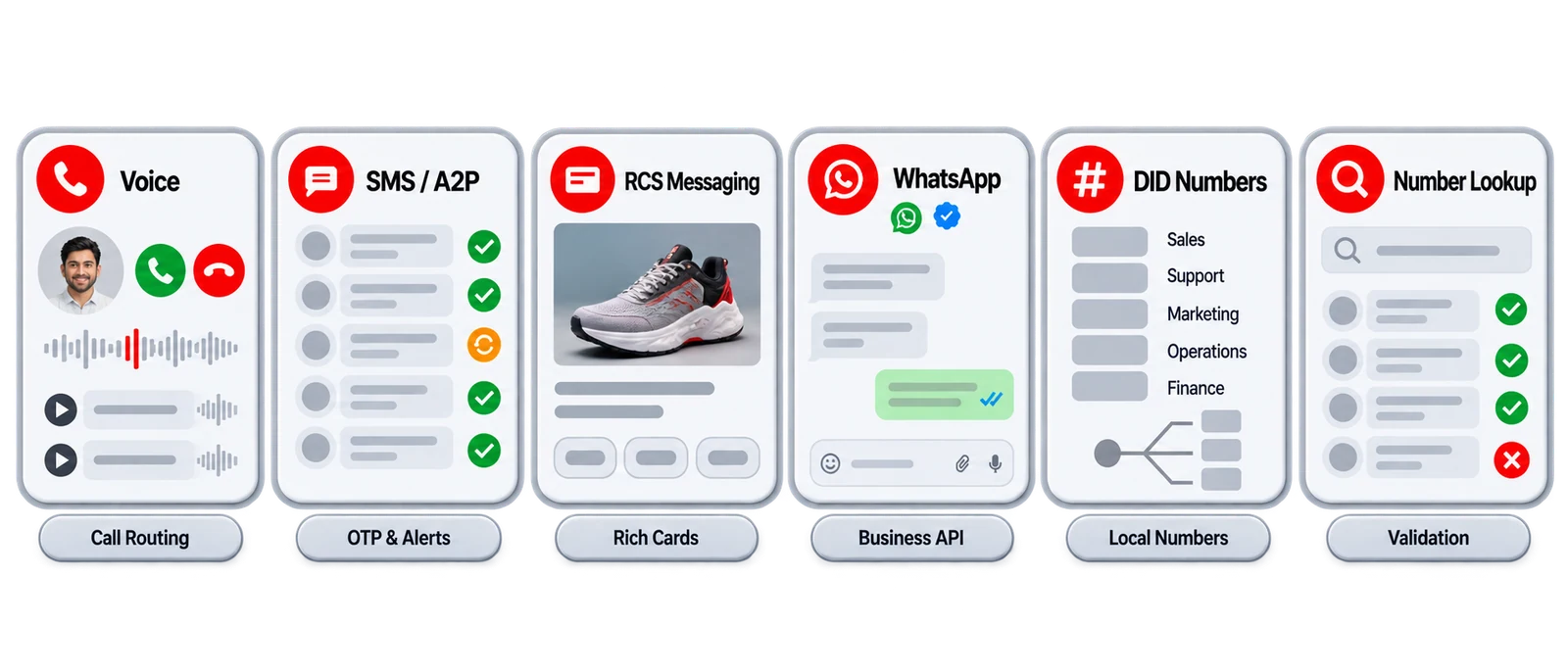
The components that make up a delivered system — every one of them specified, tested and documented.
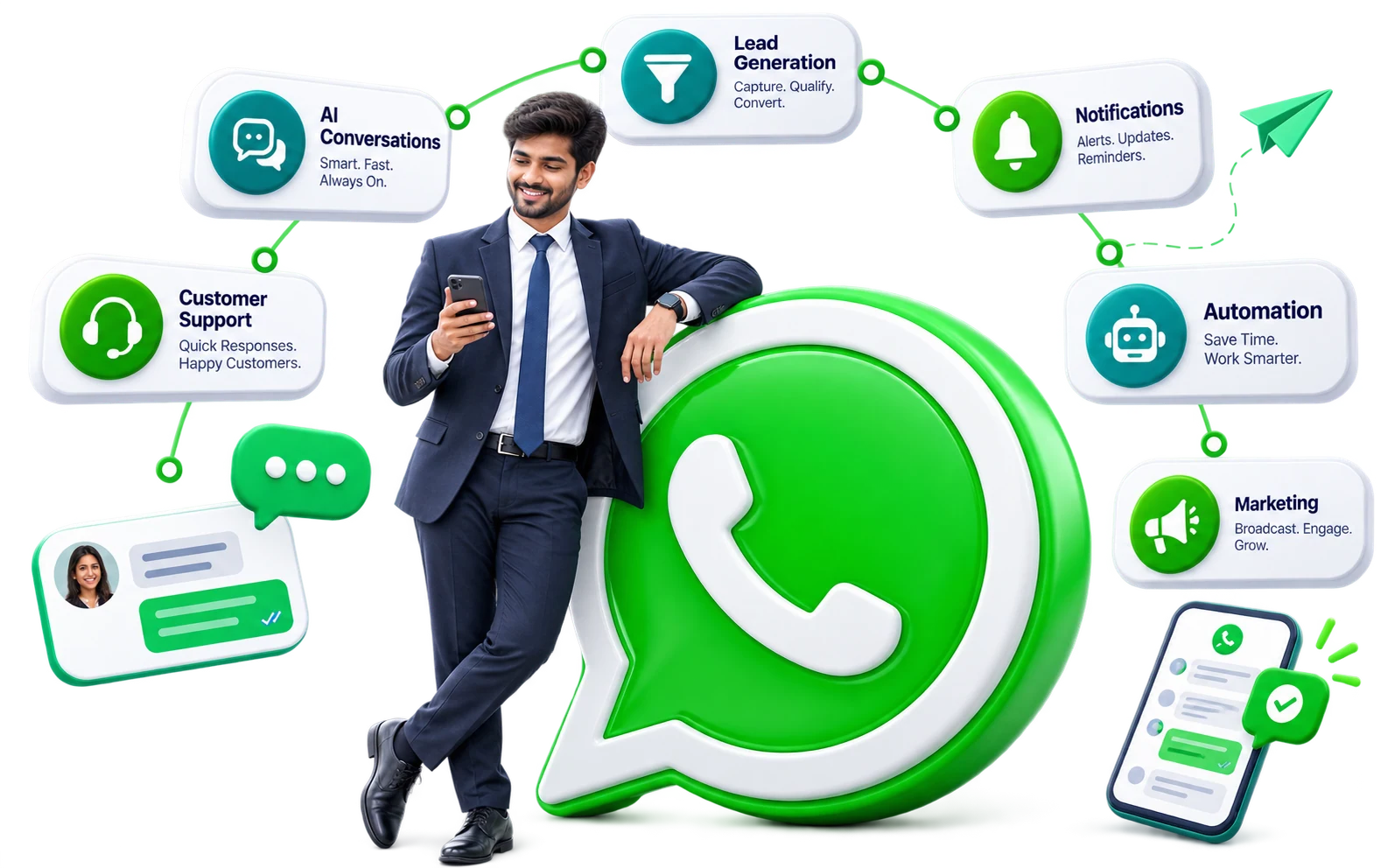
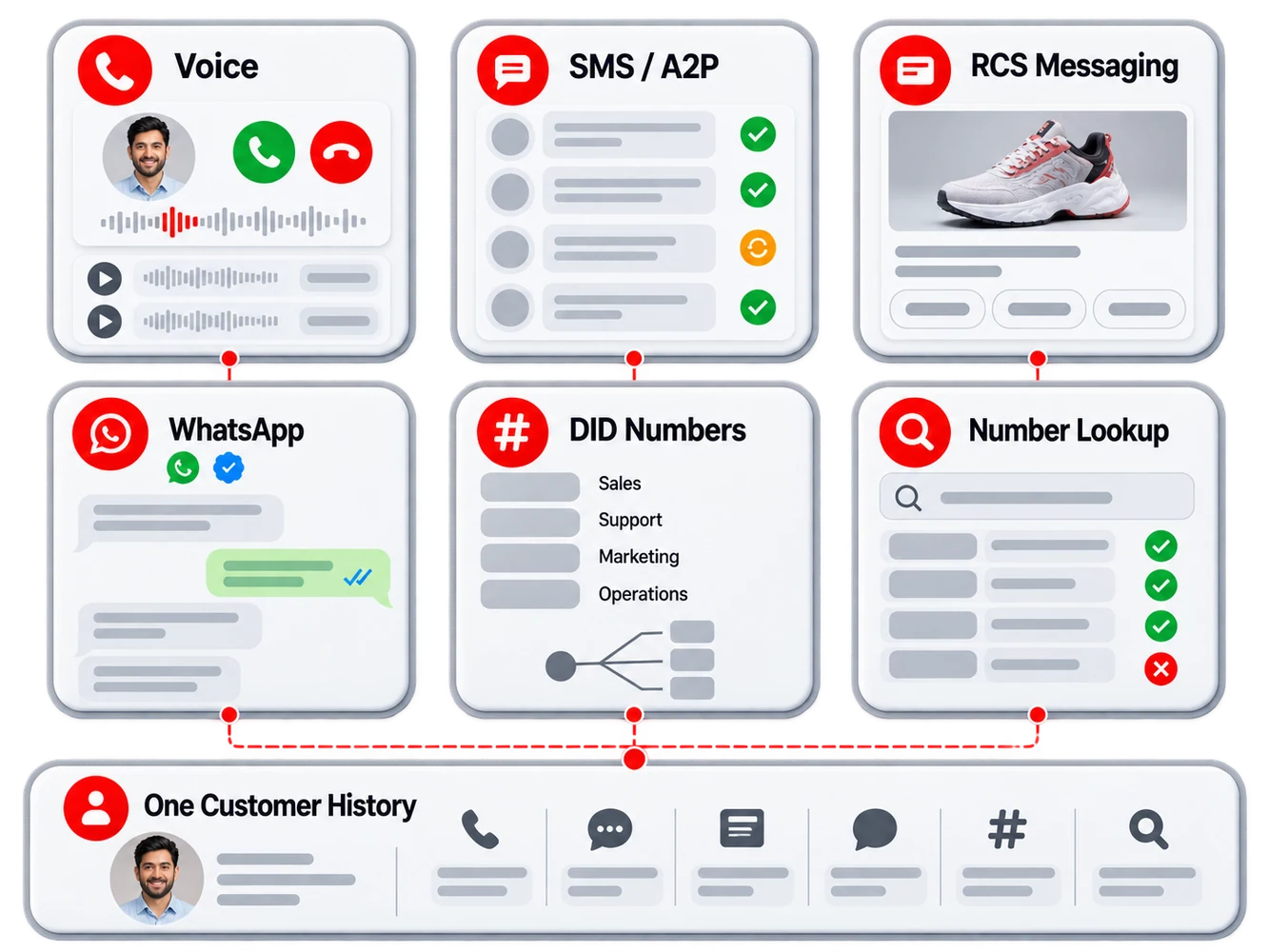
Verified business profile, approved template messaging, a shared team inbox, chatbots and AI conversations, campaign sending and full CRM integration.
Application-to-person messaging for OTPs, transactional alerts and notifications, with sender ID handling, delivery reports and retry logic.
Rich business messaging with branded sender identity, images, carousels and suggested replies on supported Android devices, falling back to SMS where unsupported.
Business voice and calling services connected to your workflows, so calls are triggered, routed and recorded against the right record.
Direct inward dialling numbers for departments, campaigns, cities or teams — so you can tell where a call came from and route it correctly.
Number lookup and related telecom data services used to validate numbers before you spend money messaging them.
Order, payment, dispatch, appointment and renewal notifications triggered by system events across WhatsApp and SMS.
OTP delivery with channel fallback and delivery confirmation, so users are not locked out by a single failed route.
A shared team inbox with assignment, templates, conversation history and AI assistance for first response.
Click-to-WhatsApp campaigns that create a CRM record on first message and start an automated qualification flow.
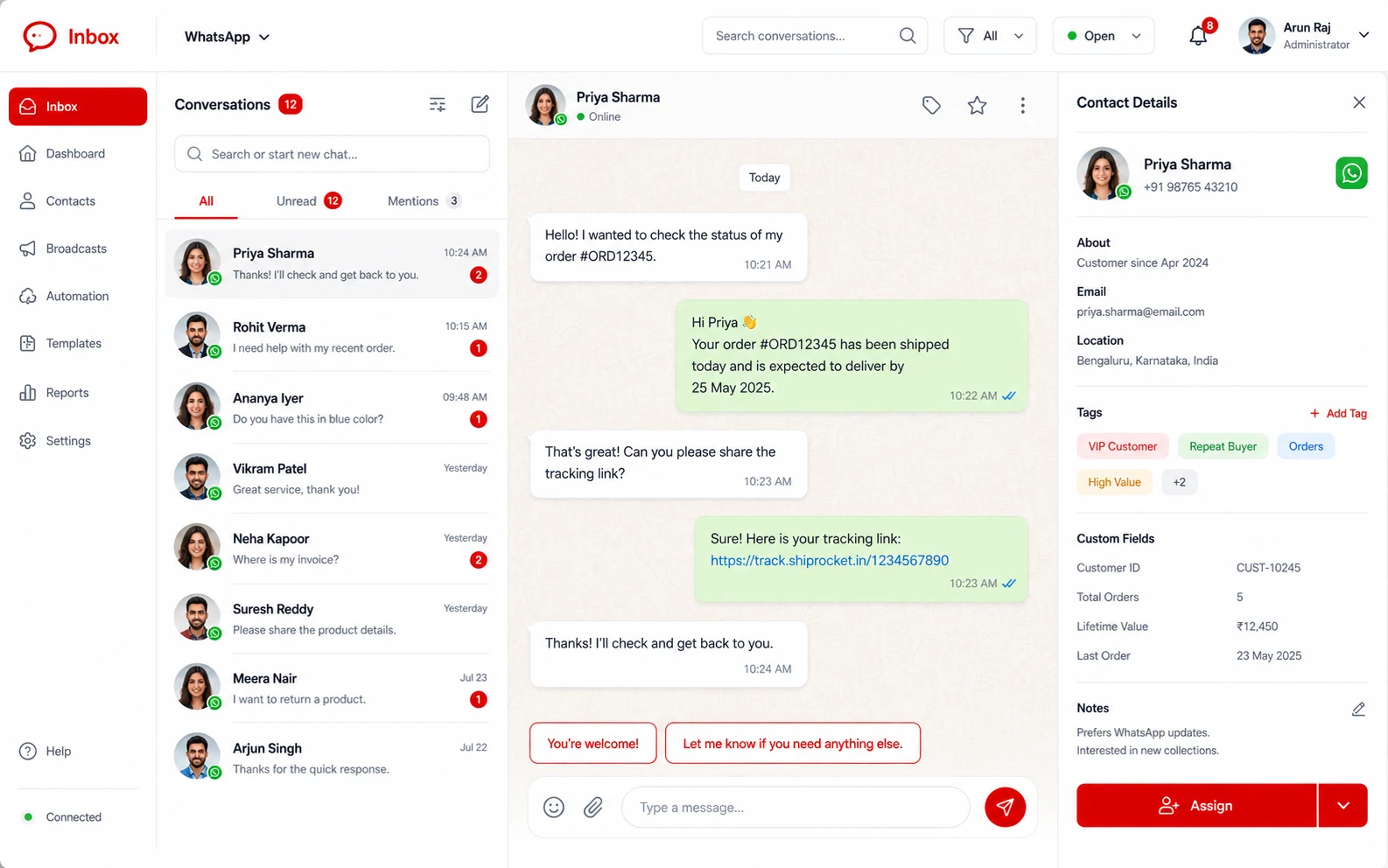 WhatsApp Business
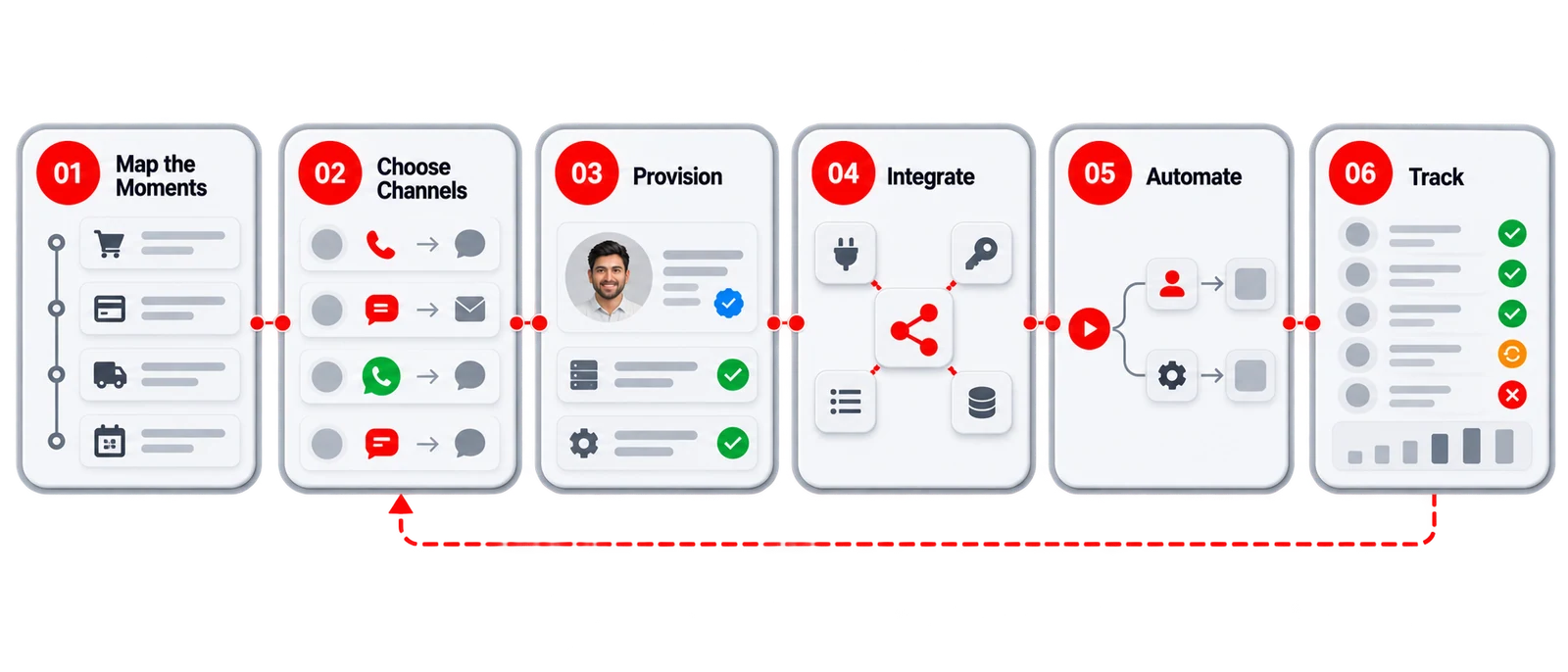
We list every point where your business needs to reach a customer, and what triggers it.
OTP, dispatch alert, marketing and support each have a channel that fits — and a fallback.
Business verification, sender identity, number provisioning and template approval.
APIs and webhooks connected to your CRM, store or application, both outbound and inbound.
Event-driven sending, conversational flows, escalation to humans and AI assistance where it helps.
Delivery, read and response data reported back into your systems.
// Order shipped → notify the customer on their channel
await messaging.send({
  to: customer.phone,
  channel: "whatsapp",        // falls back to SMS on failure
  template: "order_status",
  variables: { order: order.id, eta: order.eta },
});

// → delivery status is written back to the CRM record
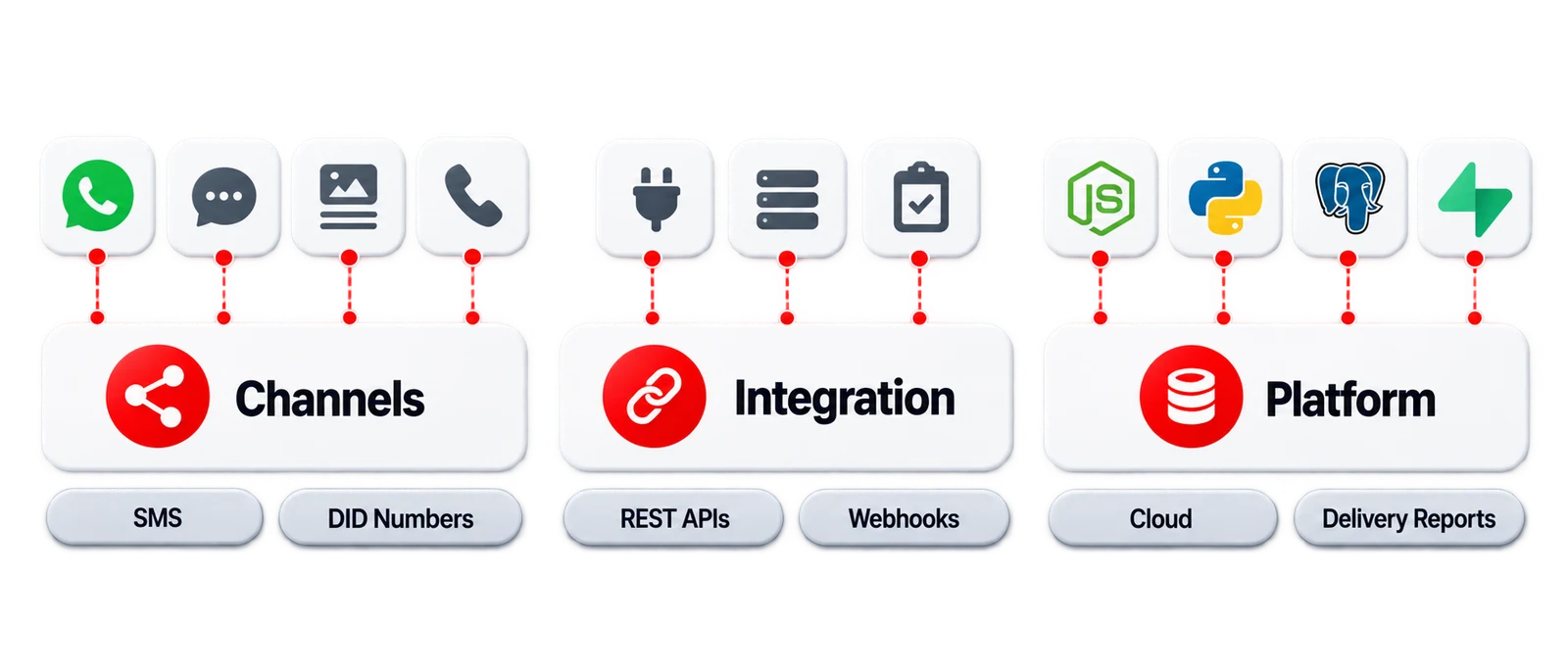
Channels
Integration
Platform
Messages are triggered by real events, not by someone remembering to send them.
Every conversation across every channel is attached to the same customer record.
Delivery reports, failure handling and channel fallback instead of hoping the message arrived.
Verified identity, team access and history that stays with the company.
The technology is similar across sectors. The process, the compliance and the moments that matter to a customer are not.
The app is a phone application for a single user with manual sending. The API has no interface of its own — it connects WhatsApp to your systems, supports multiple agents on one number, approved template messaging at volume, automation and full CRM integration.
Business-initiated messages must use approved templates — order updates, appointment reminders, payment requests, alerts and permitted marketing. Within a customer-initiated conversation window, free-form replies including images, documents and buttons are allowed.
SMS still wins where the recipient may not have WhatsApp, for OTPs needing maximum reach, and as a fallback when a WhatsApp message fails. Many businesses run both with automatic fallback.
RCS is rich messaging in the default Android messaging app — branded sender, images, carousels and suggested replies. It is worth using where your audience is Android-heavy and you want richer content without an app install, with SMS fallback for unsupported devices.
Validating that a number is reachable and correctly formatted before you spend money messaging it, and cleaning contact databases to reduce failed delivery.
Yes. Connecting messaging to an existing CRM through its API is standard work for us — inbound messages create or update records, outbound messages are triggered by CRM events.
Tell us which moments matter — orders, appointments, OTPs, support, campaigns. We will design the communication layer around them.
[email protected]
Phone+91 90472 24111
Coimbatore, Tamil Nadu, India
Remote projects available