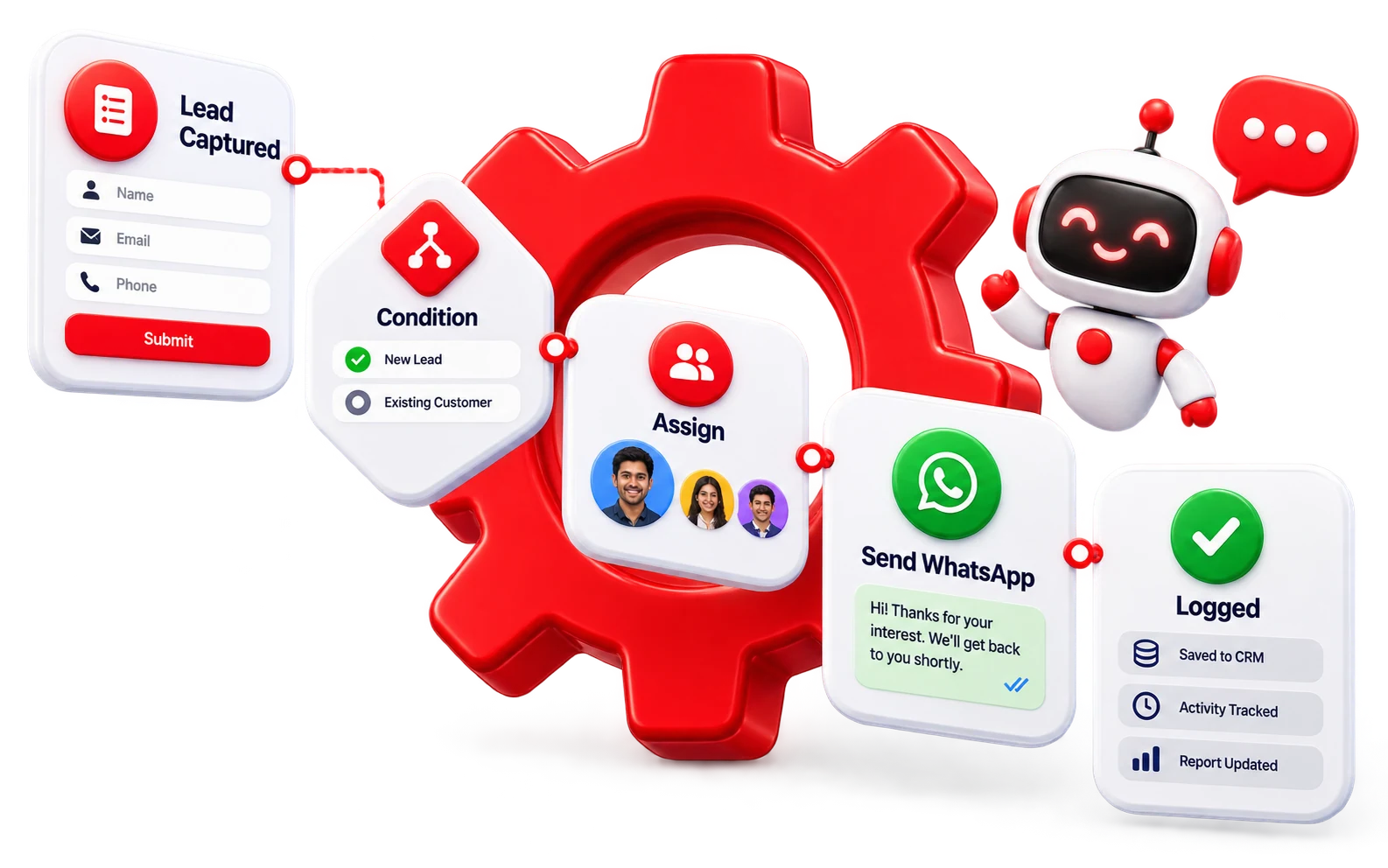
Data lives in silos
CRM, ERP, store and support tools each hold a different version of the same customer.

IT & System Integration
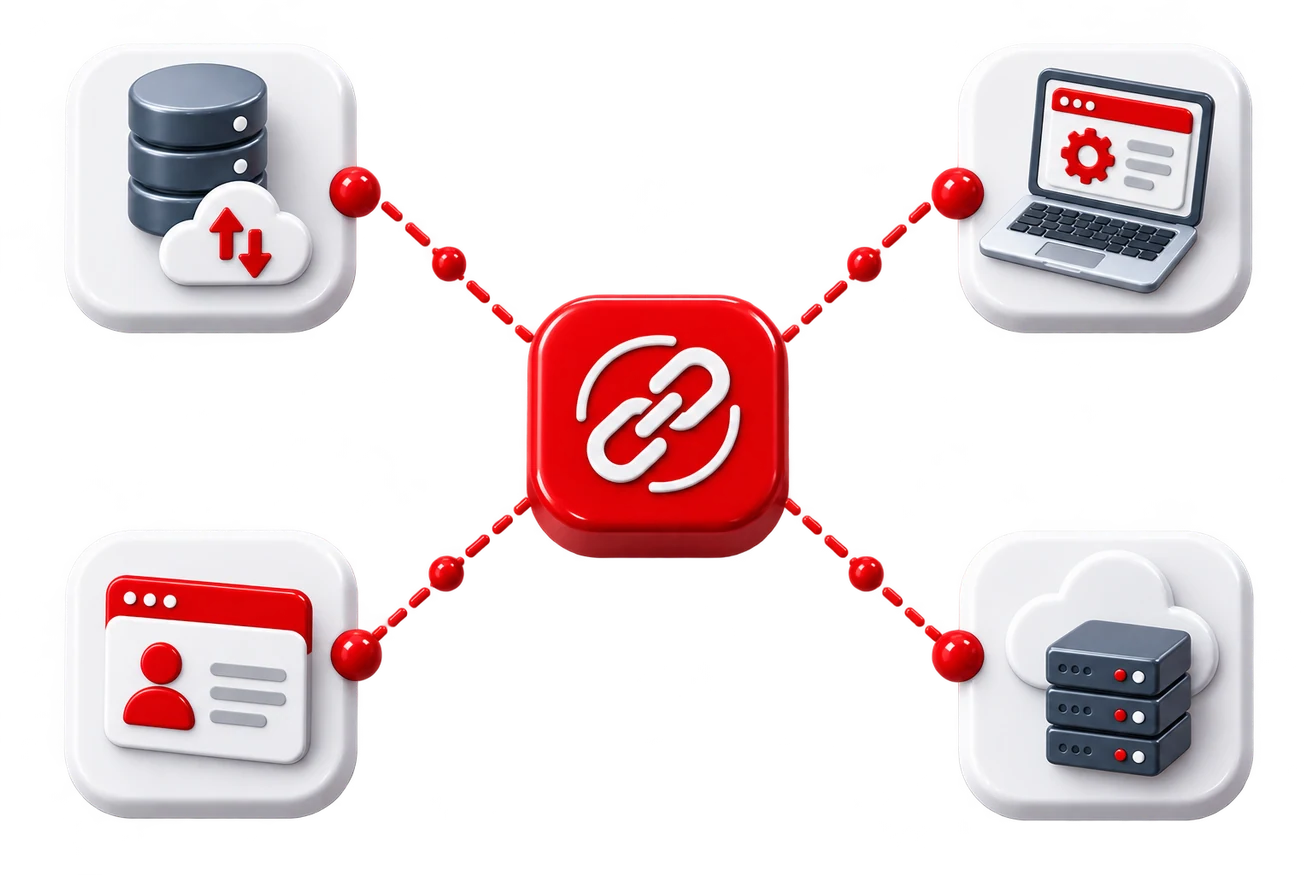
Most businesses do not have a software shortage. They have six systems that each hold part of the truth and no reliable way to move data between them — so people become the integration layer, exporting, re-keying and reconciling.
We build the connective tissue: APIs, middleware, sync jobs and event pipelines that keep systems consistent, handle failure properly and give you one place to see what moved where.
In short
Redlitmus connects CRM, ERP, websites, eCommerce platforms, payment gateways, messaging channels, cloud services and internal systems through API development, webhooks, middleware and scheduled sync. Integrations define a source of truth per field and include idempotency, retries, conflict rules, monitoring and alerting.
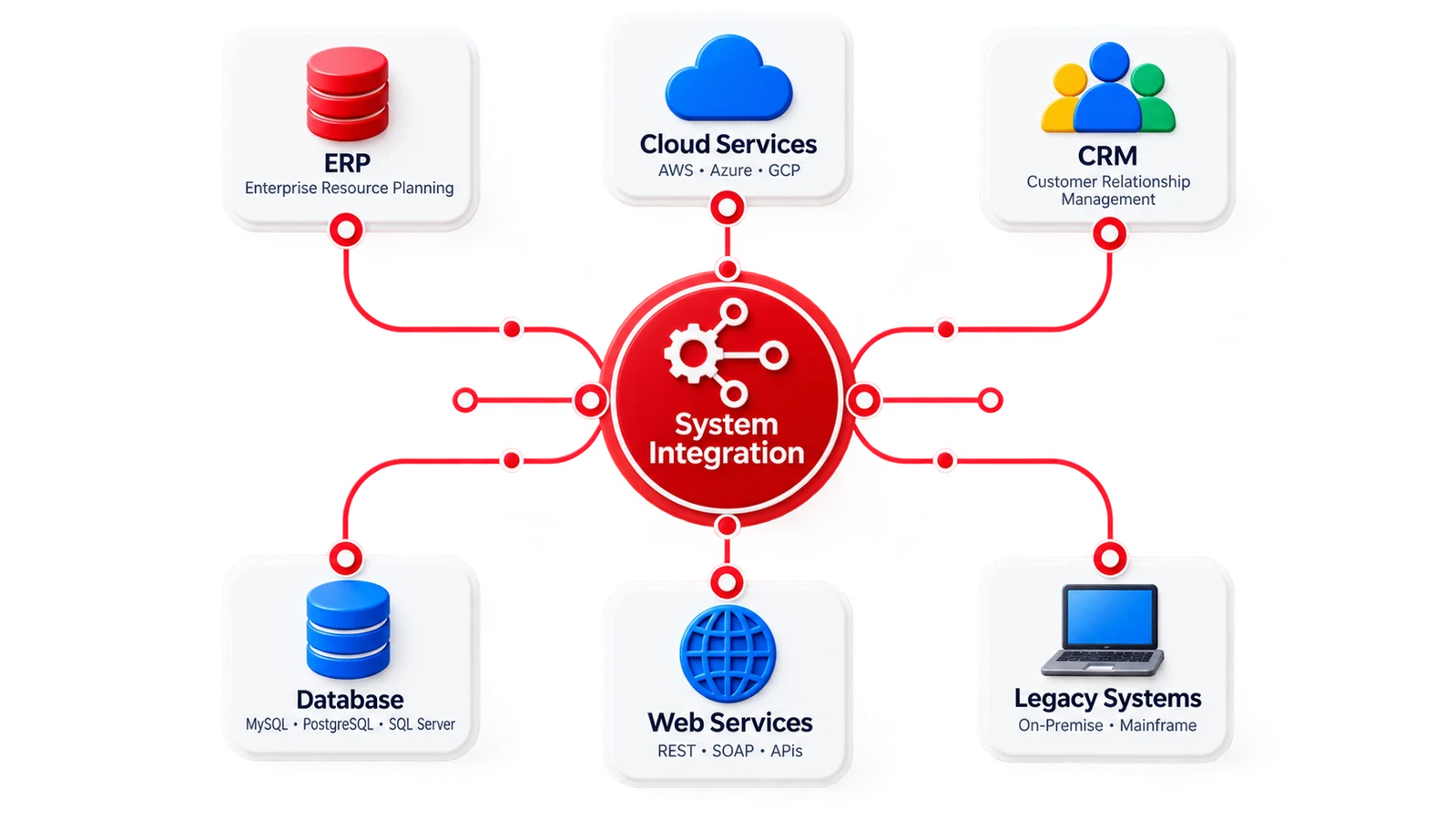
CRM, ERP, store and support tools each hold a different version of the same customer.
A sync stops working and nobody notices until a customer complains weeks later.
A critical system predates APIs, so everything around it is manual.
Every report starts with pulling CSVs out of four systems and joining them by hand.
We design the data contract first — what is the source of truth for each field, what happens on conflict, what happens on failure. Then we build integrations with authentication, rate-limit handling, retries, idempotency and monitoring, so they keep working after the launch week.
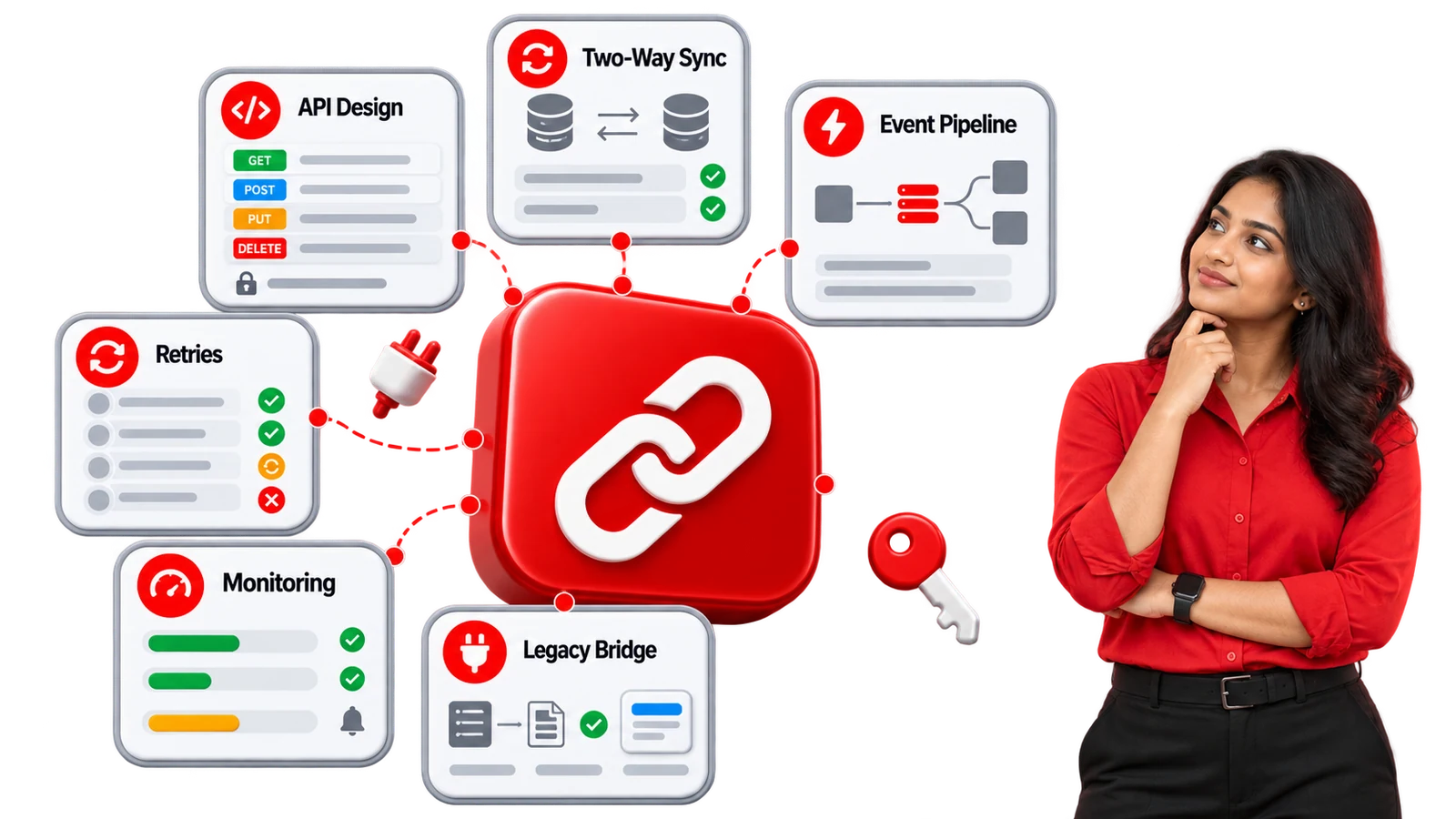
The components that make up a delivered system — every one of them specified, tested and documented.
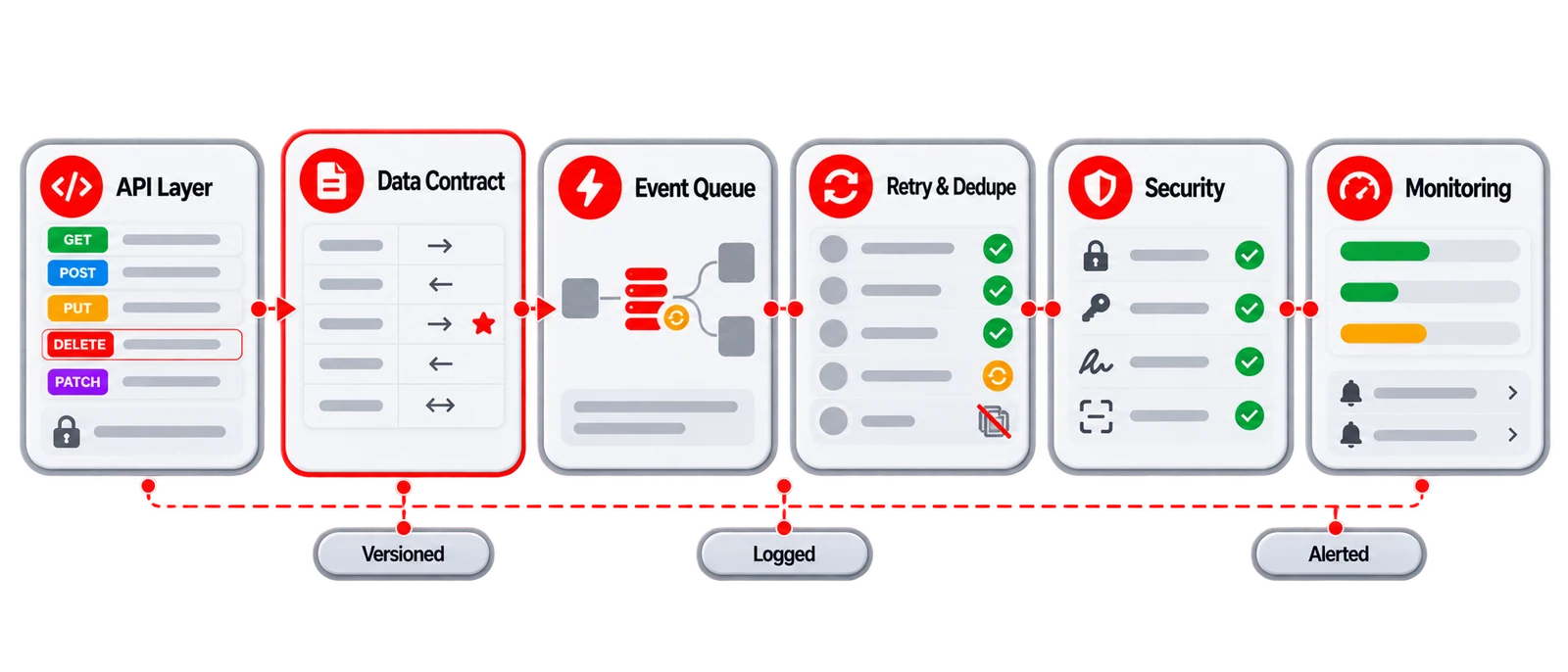
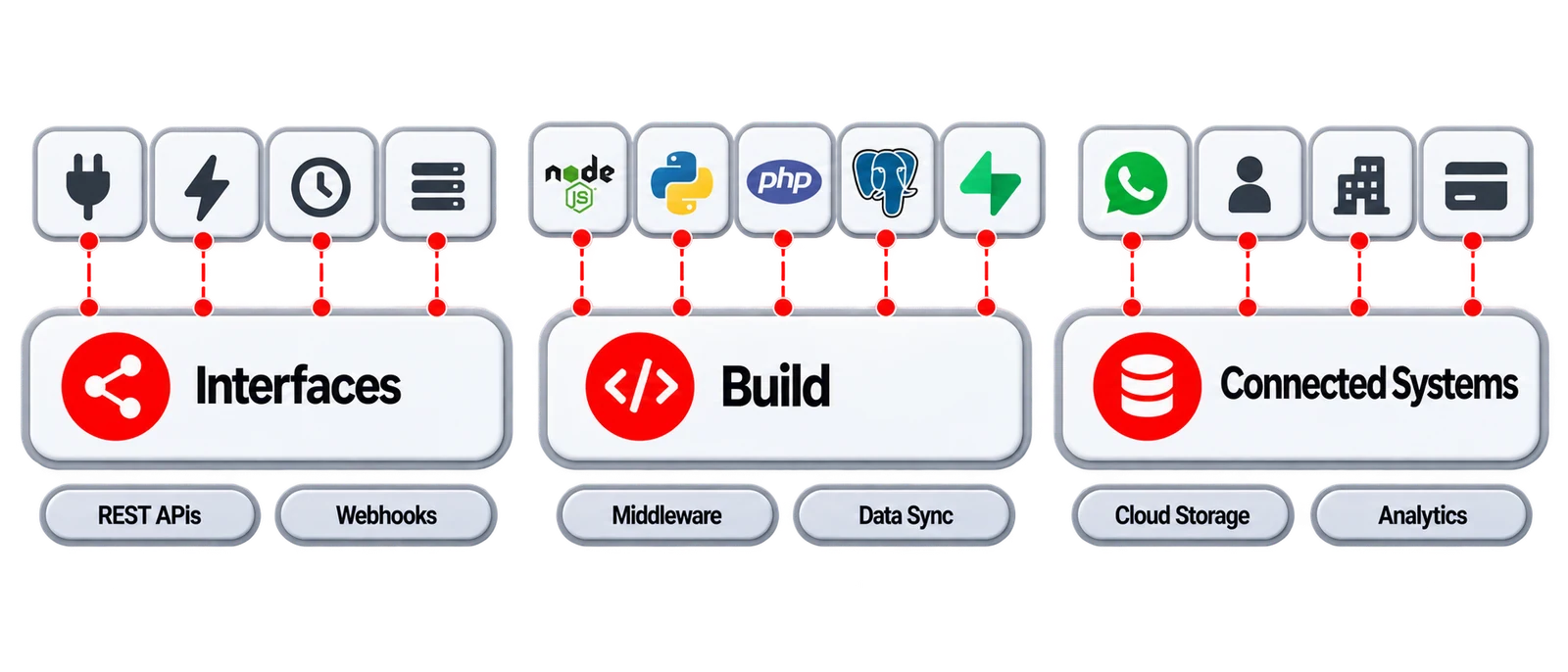
Documented REST APIs with versioning, authentication, rate limiting and predictable error responses.
Records kept consistent in both directions with explicit conflict rules and a defined source of truth per field.
Webhook receivers and publishers with signature verification, queuing and replay for missed events.
Duplicate deliveries do not create duplicate records; transient failures retry with backoff instead of dropping data.
Health checks, failure alerts and a log of every exchange, so a broken integration is visible within minutes.
Where no API exists, we build a bridge — scheduled exports, database views or a file-based interface with validation.
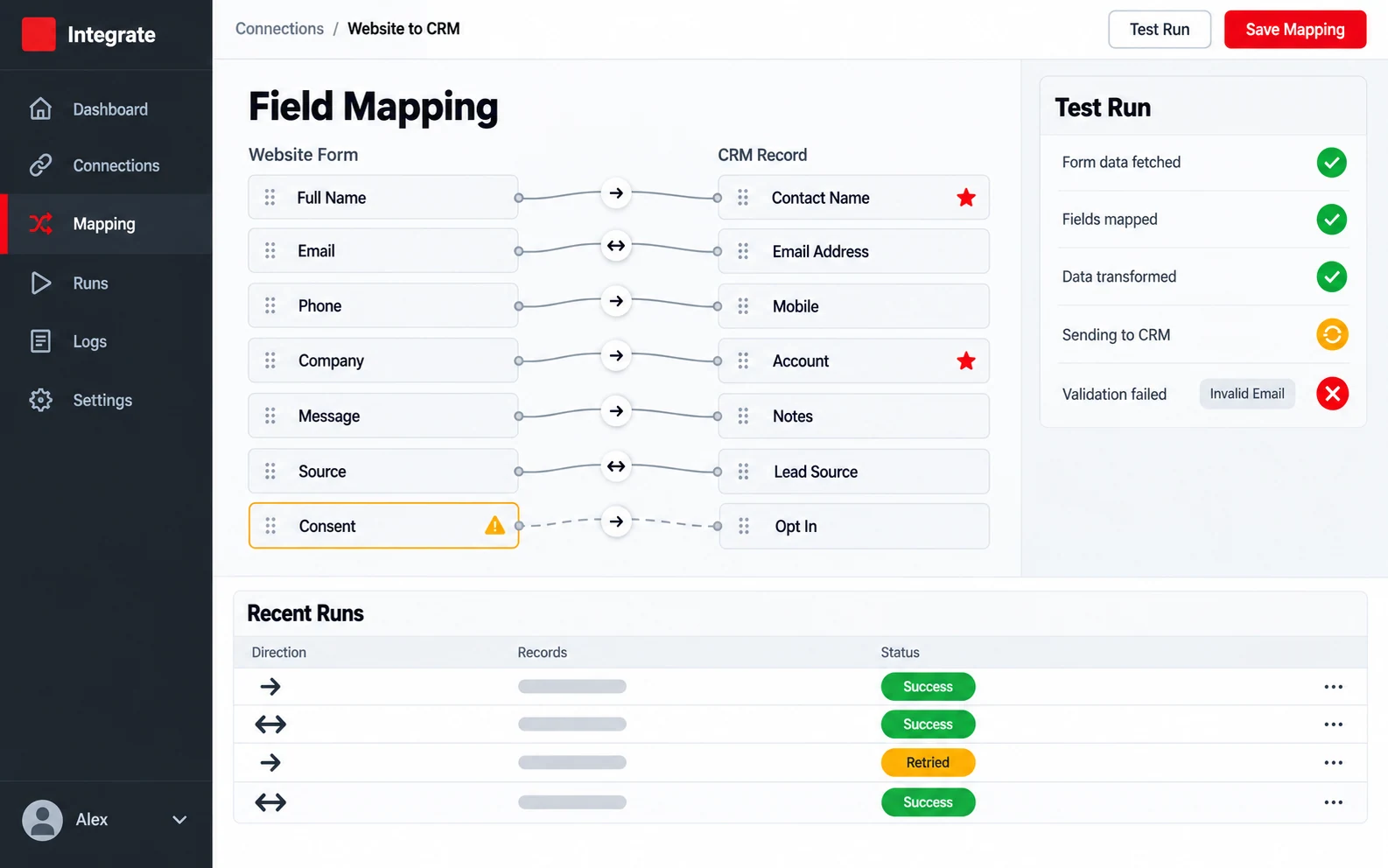
An enquiry becomes a CRM lead, a converted lead becomes a customer record, an order becomes an invoice — without re-entry.
Stock levels, prices and orders kept aligned between the online store and the system of record.
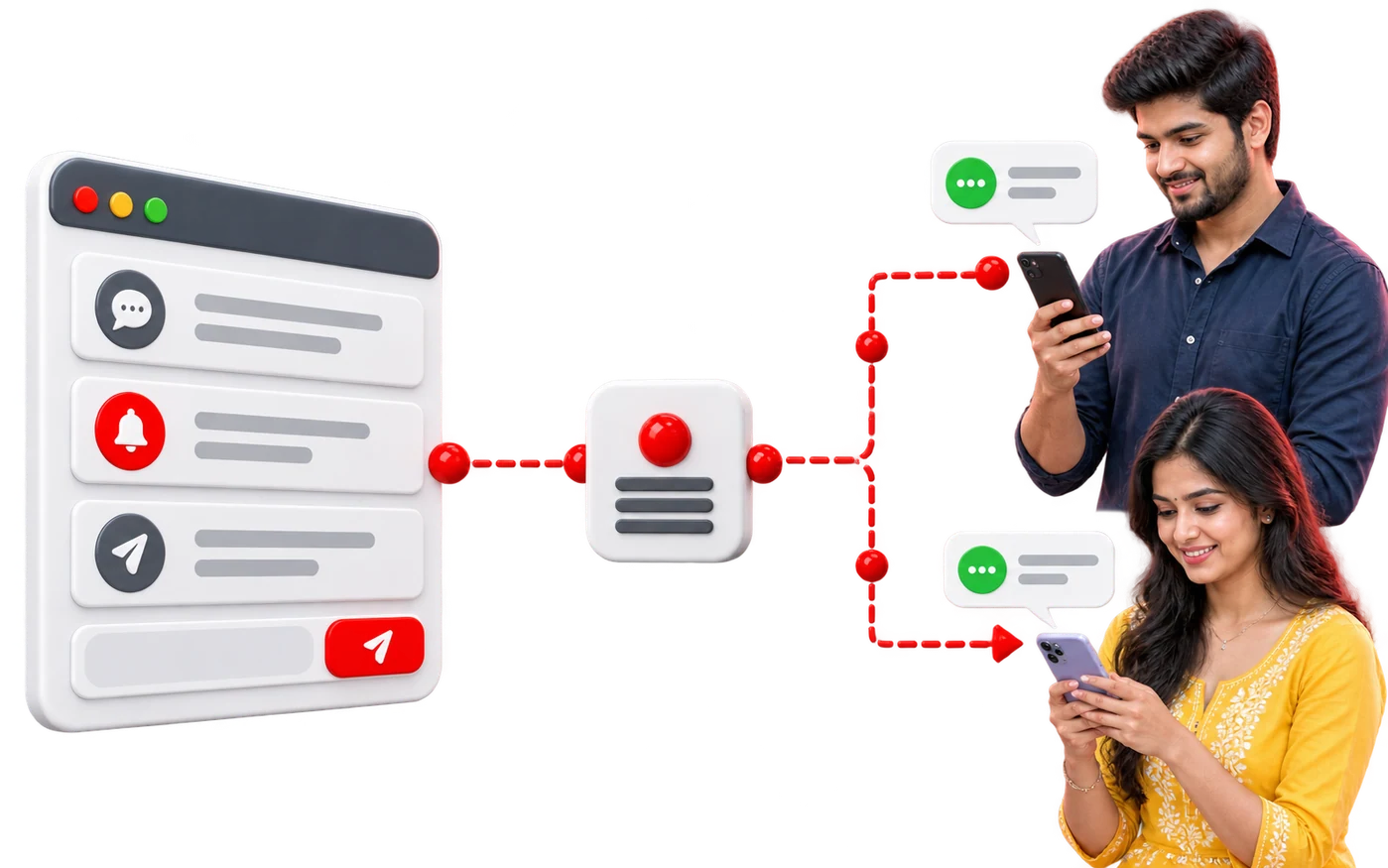
Systems emit events; the communication layer turns them into WhatsApp, SMS or voice messages.
Data from multiple systems consolidated into one dataset that dashboards and reports read from.
 IT & System Integration
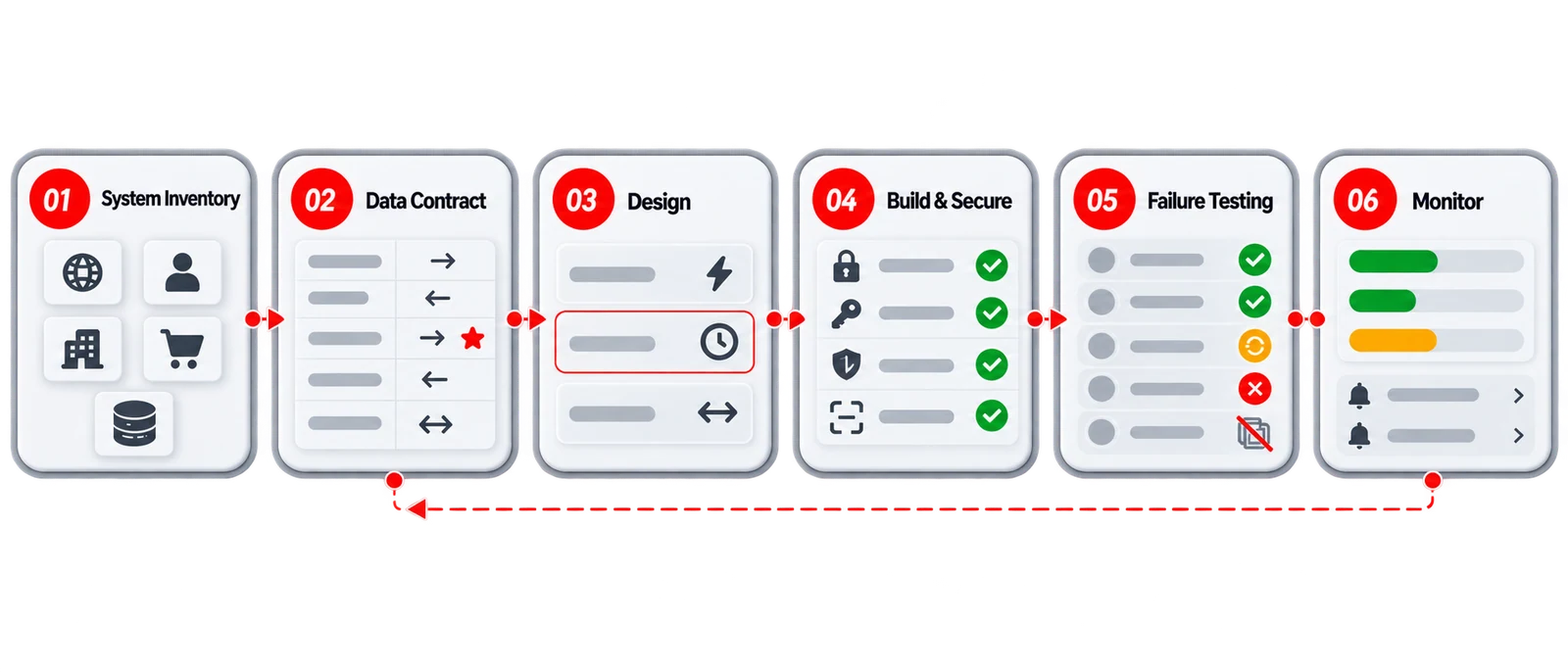
We list every system, what it holds, and what it can expose.
Source of truth per field, sync direction, frequency and conflict resolution.
Real-time, event-driven or scheduled — chosen per flow, not applied uniformly.
Authentication, encryption in transit, secret management and least-privilege access.
Timeouts, rate limits, malformed payloads and duplicate events are tested before go-live.
Dashboards, alerts and a runbook so failures are handled, not discovered.
{
  "event": "payment.captured",
  "order_id": "ORD-4821",
  "amount": 420000,
  "signature_valid": true,
  "idempotency_key": "evt_9f2c…"
}

// duplicate deliveries update, never duplicate
Interfaces
Build
Connected systems
Exports, re-keying and reconciliation disappear from the daily routine.
The customer record says the same thing in every system your team opens.
Alerting and logs turn a silent breakage into a ticket the same day.
Adding a system means one new connection to a defined contract, not another manual process.
The technology is similar across sectors. The process, the compliance and the moments that matter to a customer are not.
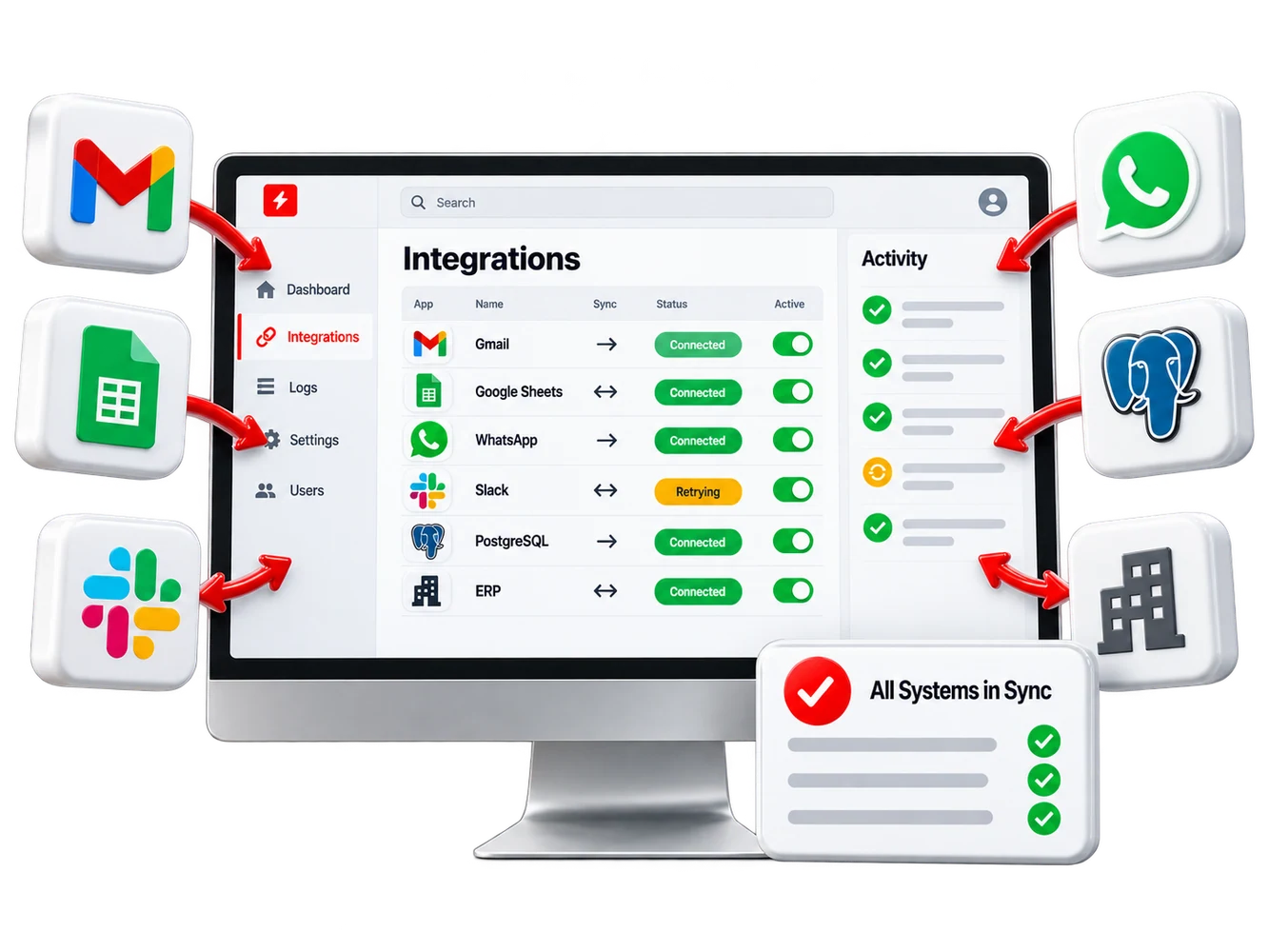
We look for a database connection, a scheduled export, a reporting interface or a file drop. Where nothing exists we say so plainly and propose alternatives rather than promising a connection that cannot be built reliably.
It depends on the flow. Payments and stock usually need real-time or near real-time; master data and reporting are often fine on a schedule. We choose per flow rather than applying one pattern everywhere.
We define matching keys and a source of truth per field before building, then implement deduplication and conflict rules explicitly — with an exception queue for cases needing a human decision.
Encrypted transport, credentials stored in a secret manager rather than in code, least-privilege API scopes, signature verification on webhooks, and audit logs of every exchange.
Yes. We audit what exists, document it, fix the failure handling and monitoring first, then improve from there.
List the systems you run and where data gets re-typed. We will map the integration architecture that removes it.
[email protected]
Phone+91 90472 24111
Coimbatore, Tamil Nadu, India
Remote projects available