In short
SMS vs RCS vs WhatsApp Business
Use SMS for maximum reach and OTPs because it works on every phone. Use WhatsApp Business for conversations, rich media and customer support where the customer has opted in. Use RCS for branded, rich messaging to Android users with SMS fallback. Most businesses run all three with automatic fallback rather than choosing one.
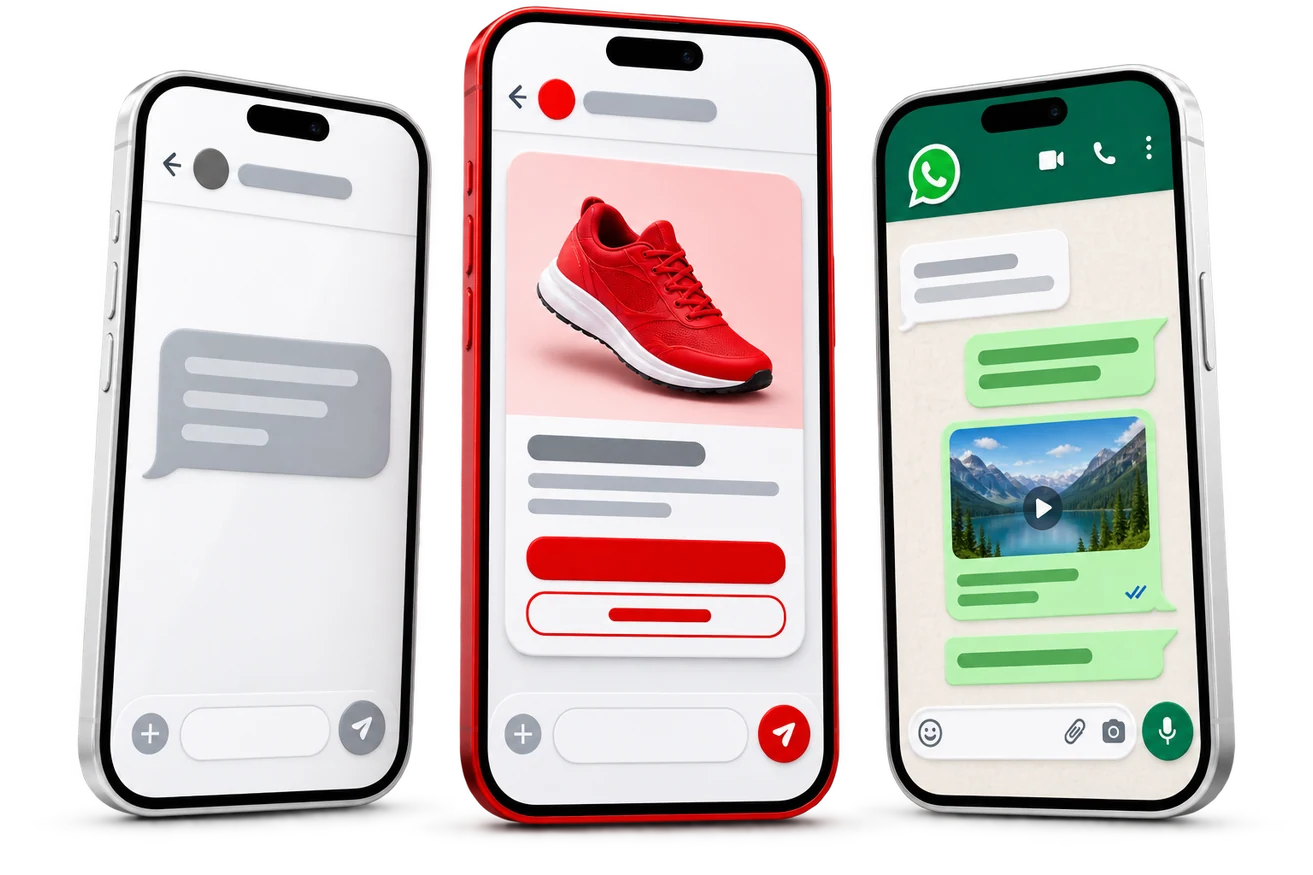
The framing of this question is usually wrong. Businesses ask which channel to move to, when the practical answer is that each channel is good at something different and the real work is deciding which message goes where — then handling failure automatically.
Side by side
| SMS | RCS | WhatsApp Business | |
|---|---|---|---|
| Reach | Every mobile phone | Supported devices only, varies by carrier | Users with WhatsApp installed |
| Media | Text only (160 chars per segment) | Images, carousels, suggested replies | Images, video, documents, buttons, location |
| Branding | Sender ID only | Verified brand name, logo, colour | Verified business profile |
| Two-way | Limited | Yes | Yes — full conversation |
| Consent | DLT registration; opt-in for promotional | Opt-in for promotional | Opt-in required for templates |
| Pricing model | Per message | Per message or session | Per 24-hour conversation |
| Best for | OTP, critical alerts, fallback | Rich notifications to Android users | Support, sales conversations, rich updates |
When SMS is still the right answer
SMS wins on one axis that no other channel matches: it reaches every mobile phone without an app, an account or a data connection. For one-time passwords, that reach is the entire requirement — an authentication flow that fails for 8% of users is not an authentication flow.
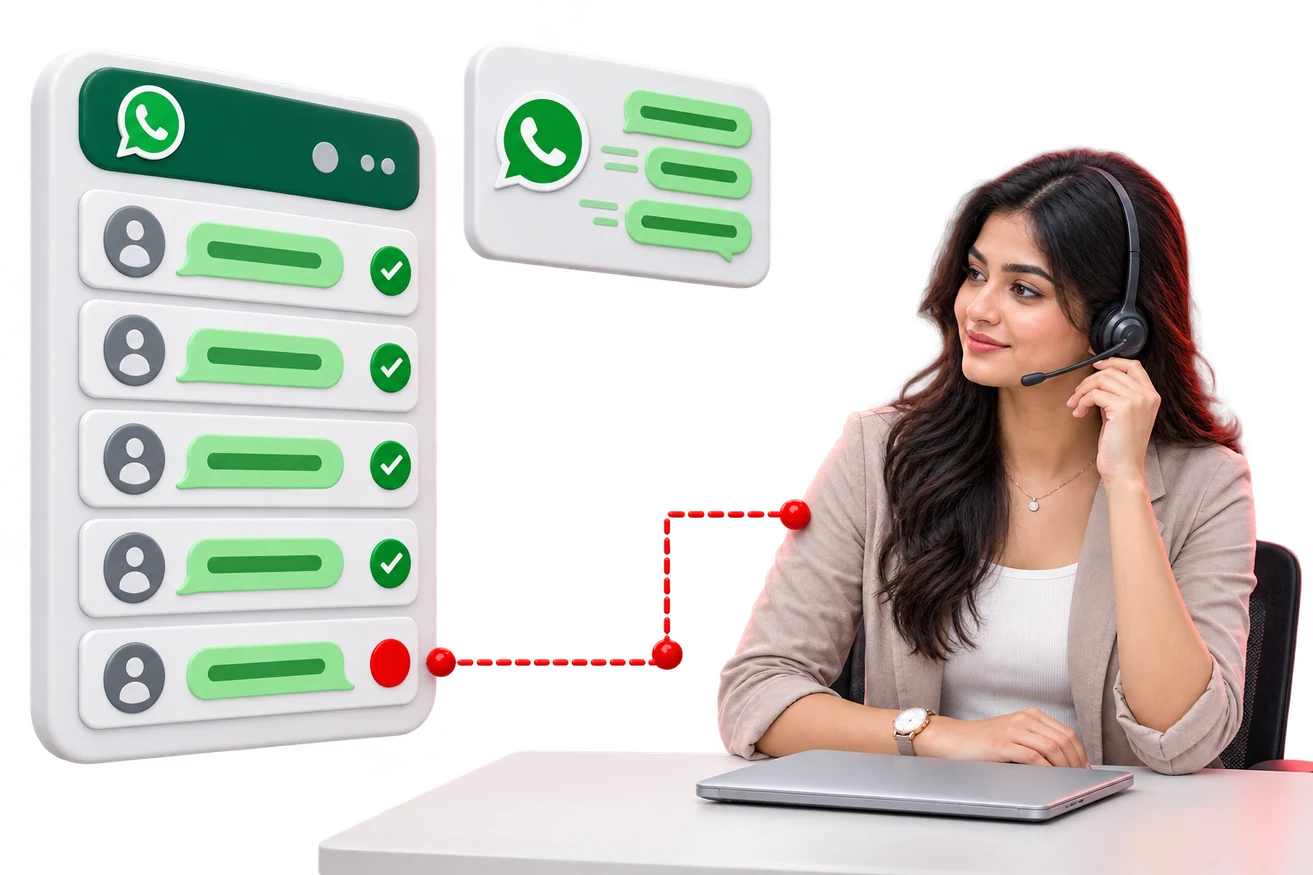
It is also the correct fallback layer. When a WhatsApp template fails or an RCS message cannot be delivered, SMS is what catches it.
When WhatsApp Business is the right answer
WhatsApp is a conversation channel. Its advantage is not that it can carry an image — it is that the customer can reply, the thread persists, and the whole exchange sits in an app they already check. That makes it the strongest option for support, for sales conversations, and for order updates that customers may want to respond to.
The constraints are real: business-initiated messages need approved templates, opt-in is required, and pricing is per conversation rather than per message. For a single-line alert to a customer who will never reply, SMS may be both cheaper and sufficient.
When RCS is worth adding
RCS upgrades the default messaging app: verified sender identity with your brand name and logo, images, carousels and tappable suggested replies — with no app install required. For an Android-heavy audience, it makes a delivery notification or an offer materially richer than SMS.
Because support varies by device, version and carrier, RCS should always be deployed with automatic SMS fallback. Treat it as a progressive enhancement, not a replacement.
A routing policy that works
- OTP and authentication → SMS first. Reach beats richness.
- Order and delivery updates → WhatsApp where opted in, RCS for Android, SMS as fallback.
- Support conversations → WhatsApp, with a shared team inbox.
- Promotional campaigns → WhatsApp or RCS for opted-in contacts; SMS only within permitted hours and DND rules.
- Critical service alerts → SMS, because it does not depend on an installed app.
What the routing layer needs to know
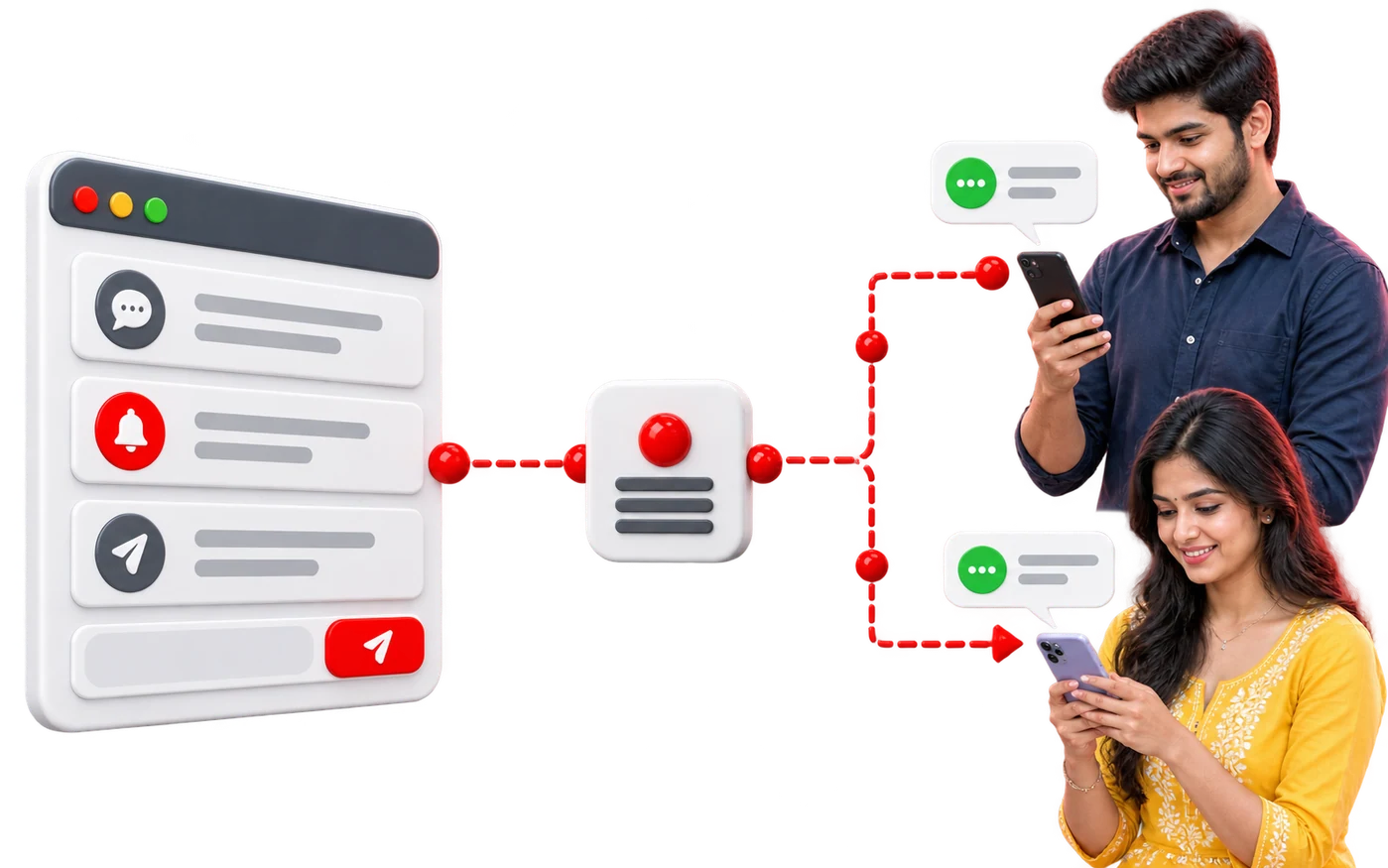
For this to work, one system has to hold the customer's channel identities, their consent status per channel, their language preference, and the delivery outcome of every previous message. That is a small piece of engineering, and it is what separates businesses running three channels coherently from businesses running three disconnected tools.
Frequently asked questions
Which channel is cheapest?
Per message, SMS is usually cheapest for short transactional text. WhatsApp is priced per conversation, which can be cheaper for extended support interactions. Cost per outcome matters more than cost per message — an unread SMS is not cheap.
Is RCS available on iPhone?
RCS support has been extending beyond Android, but availability still depends on device, operating system version and carrier. Treat RCS as an enhancement with guaranteed SMS fallback rather than a channel you can assume reaches everyone.
Can one system send across all three channels?
Yes. A messaging layer decides the channel per message based on customer preference, consent, message type and delivery outcome, then falls back automatically when the preferred channel fails.
WRITTEN BY THE REDLITMUS TEAM · COMMUNICATION TECHNOLOGY · LAST UPDATED 8 JULY 2026