In short
How Businesses Can Automate Lead Follow-ups
Automate lead follow-up by capturing every enquiry into one system with its source, assigning an owner by rule within seconds, sending an immediate acknowledgement, then running a timed multi-channel sequence that stops the moment the lead replies. Escalate untouched leads to a manager, and keep the personal outreach human while automating only the timing and the chasing.
Ask a sales manager why leads were lost and you will hear about price and competitors. Look at the CRM and you will usually find something duller: a large share of enquiries received exactly one contact attempt, and a meaningful share received none at all. Follow-up is not a motivation problem. It is a systems problem, and it is solvable.
Speed is the highest-leverage variable
The single biggest determinant of whether an enquiry converts is how quickly it is answered — because a buyer who has just filled in a form is, at that moment, actively evaluating. An hour later they are back in a meeting; a day later they have spoken to two competitors.
You cannot solve this with discipline alone, because enquiries arrive at 9pm and on Sundays. You solve it by making the first response automatic and the assignment instant.
The pipeline, step by step
1. Capture everything into one place
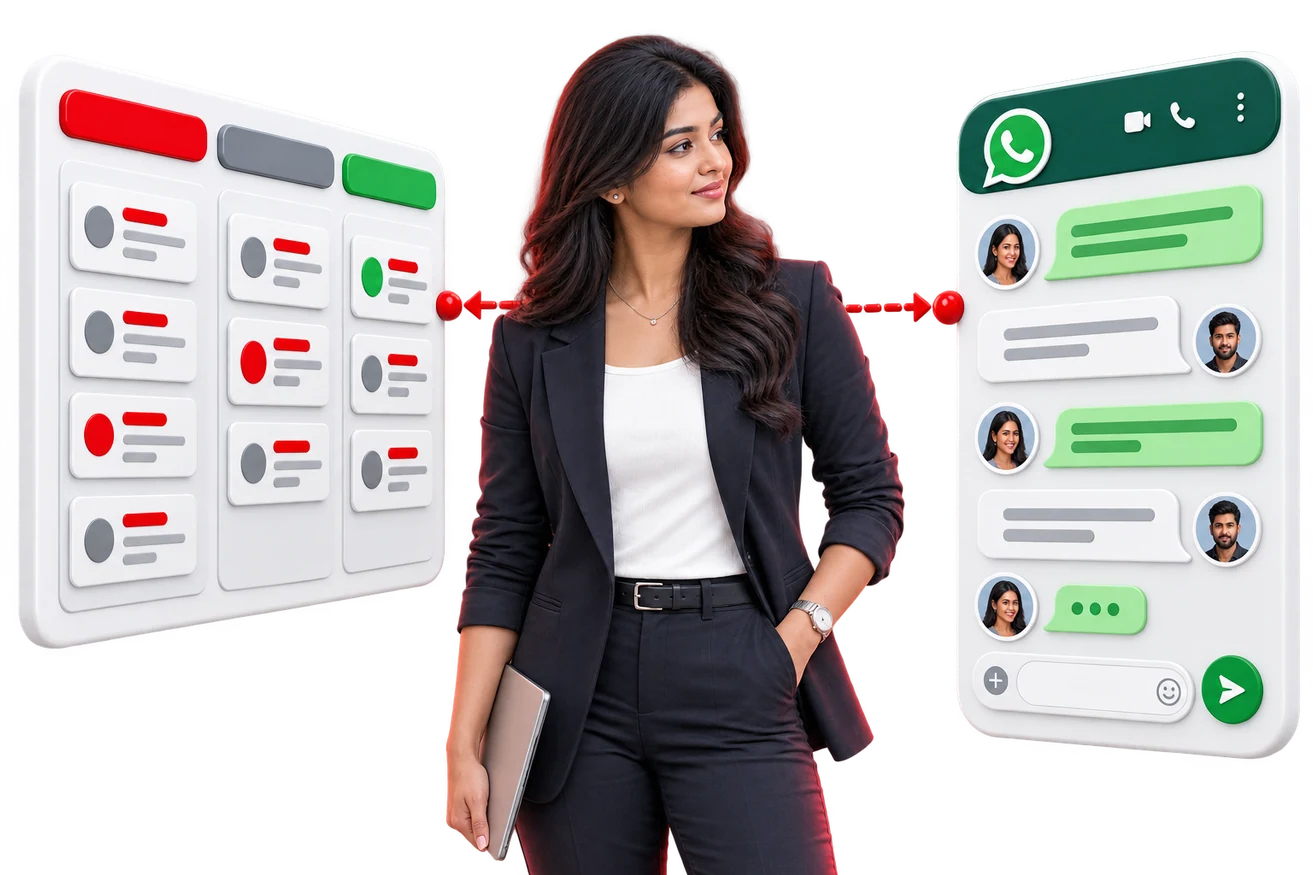
Website forms, WhatsApp messages, phone calls, ad platform lead forms, email enquiries and walk-ins all write to the same system, with the source recorded and duplicates matched to existing records. If any channel requires manual entry, that is the channel where leads will be lost.
2. Assign within seconds
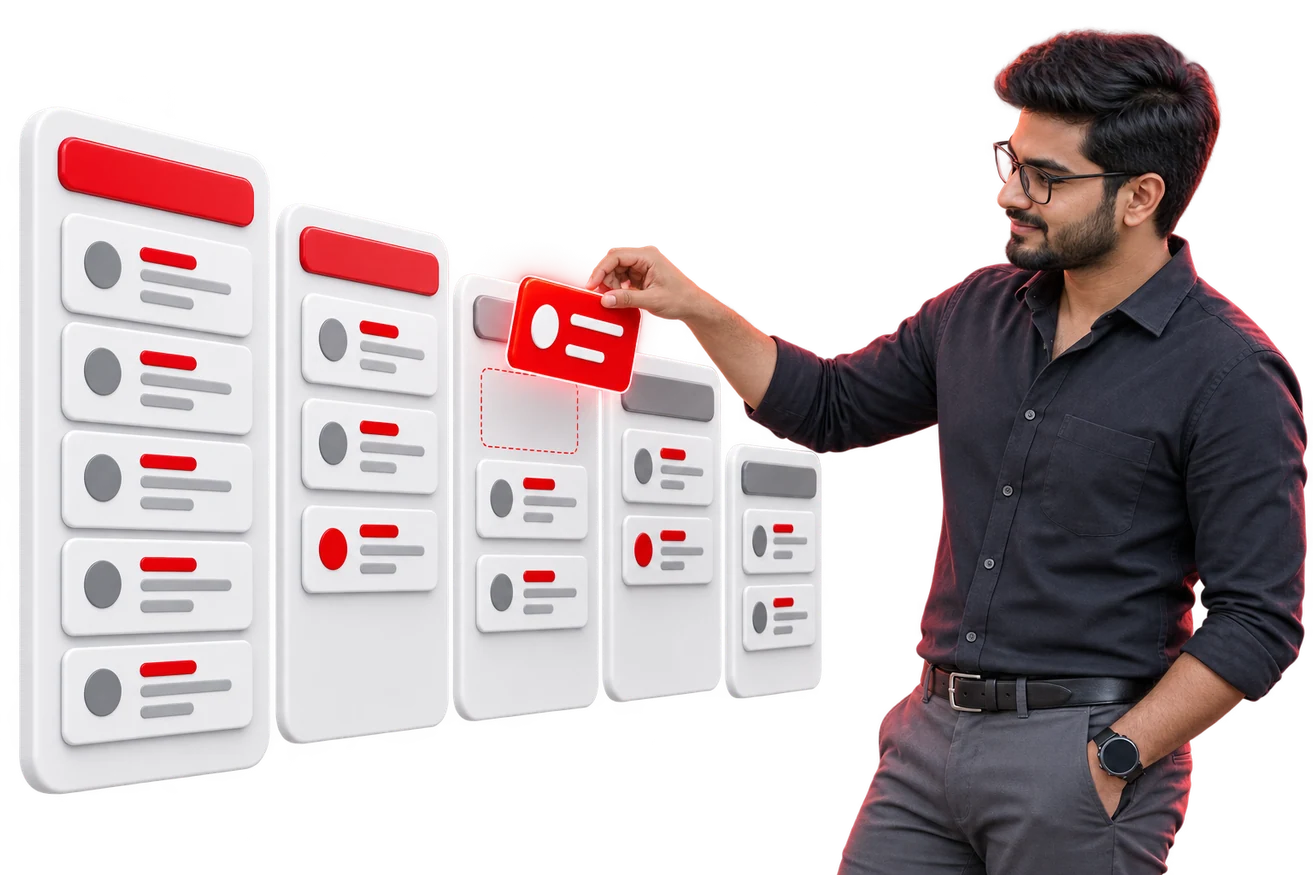
Route by whatever reflects your business — territory, product line, deal value, language, or simple round-robin among available staff. The rule matters less than the fact that it is immediate and that someone is now accountable.
3. Acknowledge immediately
An automatic message within a minute, on the channel the enquiry arrived on. Confirm what they asked about, say when a human will respond, and give one useful thing in the meantime — a brochure, a pricing guide, a booking link.
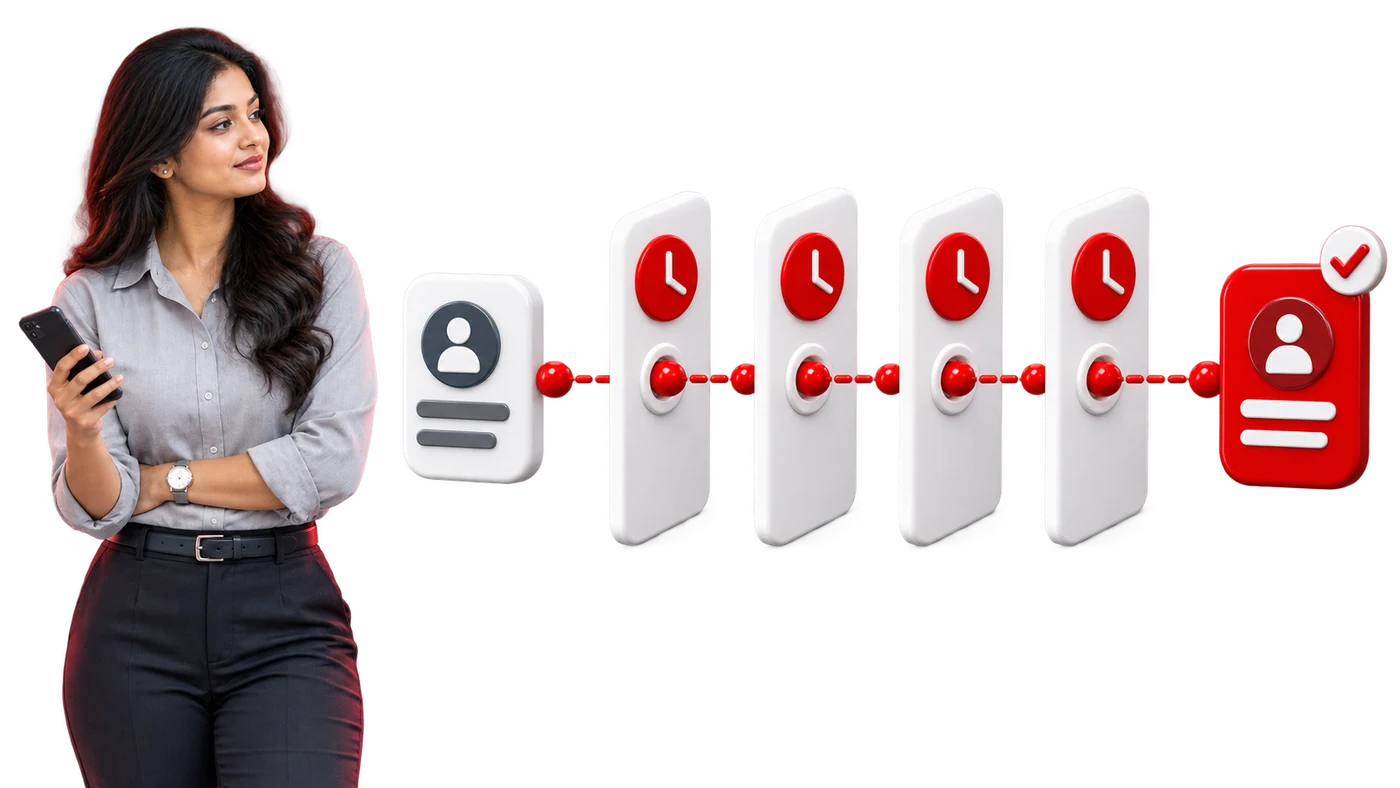
4. Run the sequence
A workable default for B2B, adjusted to your sales cycle:
- Minute 1 — automated acknowledgement with something useful attached
- Hour 1 (working hours) — personal contact attempt by the assigned owner
- Day 2 — short message referencing their specific requirement
- Day 5 — a relevant case example or answer to a common objection
- Day 10 — a direct question: is this still active, or should we close it?
- Day 21 — move to slow nurture rather than continuing to chase
5. Stop on any sign of life
The sequence must stop instantly when the lead replies, books a meeting, converts, or opts out — on any channel. Nothing damages credibility faster than an automated nudge arriving after a real conversation has started. This is the most common implementation bug in follow-up automation.
Keeping it human
- Reference what they actually enquired about, not a generic segment
- Send from a named person, not a no-reply identity
- Keep messages short enough to read on a phone screen
- Use the channel they chose to contact you on
- Give a genuine one-tap way to opt out, and honour it everywhere immediately
What to measure
- Median time from enquiry to first response, and to first human contact
- Percentage of leads receiving the full sequence
- Reply rate by touch number — this tells you where to stop
- Conversion by source, so budget follows results rather than volume
- Leads with no activity for seven days — the number that should always be zero
That last metric is the honest health check. If it is not zero, no amount of additional lead generation will fix the pipeline — you are paying to acquire enquiries that nobody is contacting.
Frequently asked questions
How many follow-ups should a sequence contain?
Four to six touches spread over two to three weeks suits most B2B sales, with the first within minutes. Beyond that, move the lead to a slower nurture track rather than continuing to chase.
Does automated follow-up feel impersonal?
Only when the content is generic. Automate the timing and the chasing; keep the message specific to what the lead actually asked about. A short, relevant message sent automatically reads better than a polished one sent three days late.
When should a human take over?
The moment the lead replies. Every sequence must stop on reply and hand the conversation to the owner with the full history.
WRITTEN BY THE REDLITMUS TEAM · AUTOMATION · LAST UPDATED 10 JUNE 2026